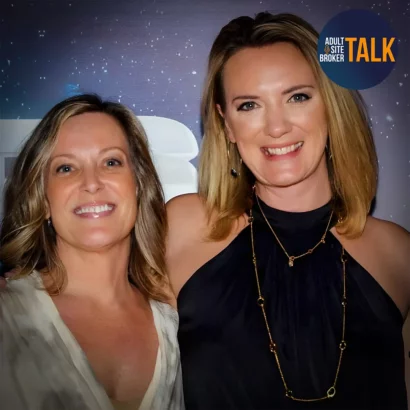
This is Bruce Friedman of Adult Site Broker, and welcome to Adult Site Broker Talk, where each week we interview one of the movers and shakers of the adult industry, and we give you a tip on buying and selling websites. This week we'll be speaking with Leah Diggle and Wendy Haggerty of MindMood. I'm proud to announce that Adult Site Broker Talk has been nominated for the prestigious AVN Award as Favorite Adult Podcast. My thanks to AVN and those who nominated us, but most of all, you the listeners. To vote, go to avn.com forward slash awards forward slash voting and choose Favorite Adult Podcast. You can vote daily through January 24th. I'll be in Cali, Columbia for the LAL Expo April 27th through the 29th. I hope to see many of you there. If you'd like to sit down and discuss business, contact me at adultsidebroker.com. We're proud to announce our latest project, thewaronporn.com. You'll find articles on age verification laws and other attacks on our industry. It's to raise awareness of our industry's plight in the war on porn. You'll find all that and more at thewaronporn.com. Now time for our properties of the week for sale at Adult Site Broker. We have a premium AI companion platform focused on emotional realism and deep memory. Users interact with lifelike companions that remember every detail and respond with real emotion. We have a network of BDSM subreddits. It has over 1.49 million users, over 3.8 million posts, and almost 45,000 comments. There's a porn picture site with both a Web3 and a Web2 domain. The keyword of the domains is one of the most globally recognized in search terms in the world, porn. We have a buyer who's looking for dating and lifestyle sites in Europe. They would also consider other geos. We're offering a strip chat white label. The average user spends 24 minutes on the site. We have a network of interracial reality hardcore sites. The main site has reality hardcore porn with amateur girls as well as some porn stars. There's a unique platform that bridges the gap between mainstream social link services like Linktree and adult content creators on platforms like OnlyFans. that combine a bio link with the ability to send virtual gifts. We're offering a growing free porn gaming site with adult sex games. The site is owned by one of the top entrepreneurs in our industry. And there's a highly active, organically grown Reddit community centered around the stocking and foot fetish niches. For more information, go to our listings page at adultsitebroker.com. If you have any questions, please contact us on our website. Now time for this week's interview. My guests today on Adult Site Broker Talk are Leah Diggle and Wendy Haggerty of MindMood. Thanks for being with us on Adult Site Broker Talk. Thank you, Bert. Great to be here. Thank you. Very good. Okay, so we'll tell everyone about Wendy. She's a certified sex therapist. She brings a wealth of expertise to the MindMood team. As the founder of Sex and Love Therapy, Wendy and her team have provided support to thousands of individuals, couples, and partners over the years. Wendy's commitment to advancing the field is evident in her active involvement with the American Association of Sexuality Educators, Counselors, and Therapists. Try saying that three times. Leah is a passionate leader and advocate for mental health with a particular focus on supporting marginalized and minority populations. Throughout her career, Leah has demonstrated a deep commitment to ensuring that mental health services are stigma-free and accessible to all individuals. As a CEO and founder of Pineapple Support, Leah leads efforts to provide essential mental health support to adult industry professionals. MindMood, teeming with Pineapple Support, is an AI-powered mental health support platform. MindMood bridges technology and human care, offering 24-7 emotional support through an empathetic, non-judgmental AI companion trained by licensed therapists. MindMood is designed to support employees, creators, and users with a special focus on high-risk sectors where stress, stigma, and exposure to challenging content are common. I got through that. Okay. That sounded great. Oh, well, thank you. Thank you. I do my best. What's the origin story behind Mind Mood? How did your own experiences and professional backgrounds lead to creating it? It was kind of, isn't that the right word, Wendy? We've both been thinking about doing, creating AI mental health support kind of at the same time. And I just happened to reach out to Wendy. And yeah, the rest is history. But I think Wendy can probably go a little bit more deeper into the real background behind it. Yeah, it was amazing. I had been wanting to just expand the reach of what I know. I've got a pretty big humanitarian part of me and I can only do what I can do in my direct contact with the individuals that I serve. I had been working with Pineapple for many years and it sounds funny, but I had a dream. Like I literally woke up from a night of sleep and I said, I need to be an AI. And this is several years back where the talk, at least in the mental health field, was like, stay away from that thing. Like, no, no way. We're not doing AI. So I was early to say, yeah, I think this is something that is needed and needs to be explored. And I did my own sort of thinking, a little pitching, and didn't find a path. And then Leia, very shortly thereafter, had reached out on an email and said, hey, may we talk? And it was really exciting. That's good. So beyond personal passion, Wendy, what gap in mental health care or workplace well-being were you folks trying to fill with mind mood? Yeah. So currently getting care is not easy and it's sort of exclusionary. There's a high cost logistics to it, just getting an appointment. Many therapists are on wait lists. In fact, Pineapple Support, who does such an amazing job at supporting the cost and providing care that is stigma-free and safe, there is still financial need to provide and allow access. So with access being limited, MindMood really does bridge that gap. And we'll offer 24-7 available for you when you need it, any time of the day, night, whatever, emotional check-ins, support, a little bit more than what you would get on any other AI or a lot a bit more. We've trained this thing really well. And it's not a replacement for therapy. We escalate when we need to. And we're here for that too. It is an easy access point. And that's why we're so excited to offer it. Leah, you want to add anything? I think it's also really important to mention that there are other mental health AI apps out that, but they are not trained in the way that MindMood has been trained. We are inclusive and deeply human and really focus on ensuring that anyone that comes to us or to MindMood for support is offered care that's culturally understanding as well. There's close-minded folks that are training close-minded AIs, and we just want to make sure that there's always the human aspect You know, it's always been created by people and those people need to be open and understanding about all different cultures and backgrounds and preferences. Sure. So, Leia, how does MindMood sit at the crossroads of empathy technology and business innovation? So, MindMood really embodies empathy through Wendy's therapist-led training. And Wendy has put a lot of her research and years and years. That sounds awful. Previous background into training my mood. And also the third partner who's not on the call today, who is Daniel. A lot of people in the industry have gotten to know over the last few years. He's not only an incredible AI expert. He also has a background in crisis support and understands that aspect of the technology that we have built. And I think it's the real human touch, as I said before. It's the humans behind this technology that are really bridging the gap and ensuring that we've created something really special. Wendy, do you have anything to add? Yeah, we worked really hard at making the conversation feel very natural. There's a lot of nuance to the way therapists or the mental health support AI will respond. And it also, you know, just from an innovation standpoint, responds in any language, pretty much any language that the user wants to speak in, which is really nice too. So, you know, you can even use multiple languages in one conversation and AI, Wendy, or whichever version in MindMood you're using will respond. So it feels so close to home for the user. Okay. And it's voice to voice. So you can chat away as if you're leaving a voice note and it will chat back. That's nice. So MindMood is built on radical inclusivity. Wendy, can you share how that's embedded in its tone, design, and functionality? Yeah, I mean, it's really part of every layer. We put that at the forefront of our goal as a way to combat what's available currently and how we're different. Everything about my mood is non-judgment. In fact, if you sort of look at the core of me as a individual partner on this, that's what I stand for. That's who I am at my core. And even within the therapy world, that's not a given. We're trained to be nonjudgmental, but it's a part of a person's character and it really shines in mind mood. So it affirms all identities, all languages, as we spoke about. It's not overly clinical. It invites the vulnerable aspects with no pressure because we've got access that's entirely anonymous. So from an entry point, anybody can speak and a user does not have to share any information, which enables the comfort, the safety and utilization. Okay. So Leah, in industries where stigma and isolation are common, certainly the adult industry qualifies. How does MindMood act as a humanitarian tool to reach people who've historically been left out of care? As Wendy was saying before, there are so many people that do not have access to to therapy and support and quite often those people are from marginalized communities they're often people that don't have the the money to pay for therapy and you know even even folks who are on a good salary therapy is expensive and you know it has to be regular you have to feel like you're you're being held trying to find the right therapist that you know that fits you and your needs is very difficult. With Mind Mood, there are a selection of a different personality to speak with. So, you know, you have that option of really finding somebody that resonates with you. With Pineapple Support, we've seen so often the creators and people behind the scenes as well, you know, really receiving stigma and judgment for their chosen line of work. also through the therapist that they reach out to, not through pineapple support, of course. What we want to be able to do is expand that, expand the reach. Also ensure that there's a lot of people out there that still hold a lot of stigma towards therapy. So they might not be so willing to reach out to a person, or they might not feel comfortable enough to reach out to even to pineapple support. this is a really nice way to bridge that gap as well. You know, it's an entry point. So folks can have a free discussion with the AI. And if necessary, the AI can escalate. And if you are a creator, you can be pointed to the right place where you can apply for therapy. Or if you're a company and you have MindMood integrated into your internal systems and you're also signed up for well-being support either through well-being by PS or another company, then we can ensure that your team members are directed to a person as well if that's needed. Okay. So, Wendy, can you share a story from the adult industry or another community that highlights the real-world need for sex-positive, stigma-free mental health tools? Yeah, absolutely. I will, you know, point to Pineapple support, which it's just such a unique access. And I wanted to add, if you don't mind before moving on from the last question, the business model that MindMood has set forth is sort of a sponsorship model where the end user is not likely to be the one providing any financials to access. You know, our goal, our hope is that it is a free tool to those that need the tool. And so the way that we're covering costs is to work with business partners. And Leia really has amazing partnerships over many, many years through Pineapple support. And the industry is super supportive and needs to be. We understand or folks understand the needs. So it's that business model as well that's providing great access from a financially accessible standpoint. But sure, in terms of real world stories, we have so many of them. I've personally worked at any given point, usually about 20% of my care is within the industry. And without using real names, I've worked with many. We've got, say, a performer that have had years and years of working in the industry and maybe has some burnout, perhaps has experienced trauma, if that person wanted to approach care with someone outside of the support module that Pineapple offers, the likelihood of the employment, the work itself being the focus versus the work just being the work and the person being seen and heard and the boundaries being really sacred. So one of the users who is a performer that I've worked with personally, but we also offered Mood too, is such a person. And her work is really a trauma-focused piece, having absolutely nothing to do with her current work. And Mood, you know, in her feedback to us really met her, understanding the boundaries and honoring them. It helped her unpack some shame and judgment and things that she had not spoken about, even in that therapy that she had with real person Wendy. And the combination is really helpful. In fact, her career is better for it, her self-worth, her personal relationships. And I will say this too, relationships are at the forefront, which is different than what we think about when we think about AI and anything online. We sort of think, well, okay, but where's the IRL, you know, length, where's it in real life? And my moon is trained as I am trained in systemic based therapy, which looks very holistically at a human and the relationships being very, very important. So we've really kind of unmasked some of the pieces that can be missing for those that use traditional therapy or who have not. And the person, she really felt like this surviving aspect, it helped her go from maybe just surviving, honestly, to thriving. She's doing her work from a very empowered stance and feels great about the results. So we had some really wonderful feedback. That's awesome. I've had some amazing feedback, haven't we? I love that. Yes. It finally came to life. I know you worked on it for a long time, so it must be very gratifying. Leia, my mood has been described as scaling human compassion. How do you keep the responses genuinely empathetic rather than robotic? I mean, most of that is down to Daniel's fantastic technology and, of course, Wendy's training. But we're talking about feedback just then. And the amount of testing that we've done on the product is immense. And that's really what we were focusing on. A lot of people are using ChatGPT and other platforms to ask for support. And they're being given horrific advice when they shouldn't be giving advice anyway. But, you know, it's having hugely detrimental effects. So for us, the testing aspect is top importance and really listening to the feedback and ensuring that the responses just feel human and ask the right questions and have that right tone of voice. I had a friend who I asked to test my mood, and I sat with it for 10 minutes, and afterwards said, it took six months of therapy with my therapist for my therapist to come up with the same response that this has. Wow, that's incredible. It really is incredible. Yeah, yeah. AI can do amazing things, and it can also do really bad things, and it just depends on how it's programmed. So it sounds like this has certainly been given good programming and a lot of work to get to where it is. What are some examples, Wendy, of how MindMood detects emotional states like anxiety or panic and adapts in real time to help someone stabilize? Yeah. So the detection model will pick out patterns and it spikes if there are some short replies. It spikes if there are some keywords like overwhelmed triggers and anxiety flag, erratic pacing signals panic. So in real time, it will adapt and it shifts to the foundational training, which is a holistic care model and offers like grounding exercises in the moment. So instead of continuing the conversation as is, the AI will stop the conversation and ask for some breathing together. It uses, you know, sensory anchors. Can you name three things that you see in your room right now? It will slow the voice, you know, with the modulating voice. It's really seamless. And then if it escalates to a point where we know there's a need for higher care, it seamlessly hands off to crisis lines. And we've tested this and we have such good oversight for this because we know the alternative is potentially harming folks. So our oversight is really at the forefront. We're very transparent. This is still AI, but there's like a soul involved, you know, here that makes my mood. and AI Wendy or AI whomever on our platform different. Yeah, sure. Leah, how did you guys avoid the pitfalls of cold AI? And what makes your model different from traditional chatbot training? I think with traditional chatbots, they tend to prioritize speed and agreement over soul and really listening to a person and picking up on those patterns. We've really tried to sidestep it by, I want to say, making Wendy, making my new very bespoke. And, you know, bringing all of our experience from three very different walks of life, from Wendy's background in therapy, from my background working specifically with people in the adult space. And, of course, you know, Daniel with his technology and background in crisis care. We've really tried to ensure that this is real therapeutic model that will constantly evolve as well. And ensuring that it has ethics and it has a lot of safety barriers in place to make sure the conversation cannot go in a wayward direction. And it doesn't try to continue to support somebody that clearly needs to be escalated. Right. Yeah, I've heard about people trying to get support from something like ChatGPT and ChatGPT agreeing, yeah, you should go kill yourself. And it's like, huh? Yeah, we've really trained MindMood for connection. Right. Not to agree with everything like ChatGPT does. Yeah. A lot of them are quite gamified as well. And they're just there to get more hits because of the way that we've set MindMood up. You know, we want people to, we're not about getting more conversation. We're about, you know, we're about ensuring that the conversation is poignant. Yeah. So, Wendy, is adaptive learning part of MindMood's design? Meaning, does it get smarter and more personalized the more people use it? It does. MindMood has that built-in advancement. It also, because it offers an anonymous interactions, each session will restart. If the user wants to log in, if the user wants to keep the platform open, you know, it does adapt so that future chats are building upon one another. But we do have a reset because the demand for privacy is also at the forefront. So it does both. We don't store data unless there's an ongoing use pattern without shutting it down and or, you know, a login, which will be available, but not necessary. The patterns do sharpen over time. And MindMood is a growing thing with the technology, of course, that's available. And so, yes, it's both and. Very good. Leia, how does MindMood integrate with well-being by PS and corporate well-being programs to create a seamless experience from AI to human care? So this is something that I felt very strongly about with being part of this project, which is a personal project separate from Pineapple Support, which for the last eight years I've been running. and my mood is, well, both are. Pineapple support is, you know, obviously my passion project and I feel very strongly about ensuring people get the correct support and that should be affordable and timely with somebody that understands. Now, we're also with pineapple support branching out into offering corporate wellbeing. This was birthed from a number of companies that we work with contacting us and asking if they could prepay for sessions through pineapple support for their team members, for example, those in kind of compliance and moderation that are subject to some quite traumatic imagery. And so after hearing this on so many occasions, you know, that just seemed like the logical next step to create wellbeing by PS, which is corporate wellbeing, utilizes, we've got maybe 600 therapists, maybe over 600 therapists registered with pineapple support now. And it utilizes that network. It utilizes all of our background in offering support to a high-risk industry, to now offering support to all high-risk industries. So I wanted to make sure that whatever we did with MindMood was always going to be able to hand off, not hand off, but when MindMood suggests somebody should reach out to a human, we want to make sure that that human is also going to be understanding of the type of industry that this person is quite likely coming from. And the best way for us to do that is to work with, hopefully work with the companies that integrate MindMood and have them also work with wellbeing by PS so that when somebody using MindMood is directed to a therapist, they can be taken directly to a place where they can get that therapy for free or that's been paid for by the company or if they're a creator that is through Pineapple Support. Yeah, it's very important for me to make sure that people get the care that they need with somebody that's going to be understanding of that. And of course, if Pineapple Support can benefit in any way, it's always a good thing. Yeah, and just let me say, I knew you when you started Pineapple Support and I see how it's grown. And man, crazy how successful it's been, Leah. How many people you guys have helped, how many lives you've saved. I just have to congratulate you on that because it's been amazing. Thank you. It does quite often feel like a pinch me type moment. Yeah, no, I hear you. When you talk about over 600 therapists, I go, oh my God, that's crazy. I remember last time we did an interview, I had to update the number because I was using an old bio. So it was just like, wait, wait, wait, we got more now. Oh, okay. Okay. Okay. Let me redo that. How can company leaders, Wendy, measure the impact of integrating mind mood, whether through engagement, retention, or morale metrics? Yeah. So when you think about someone having a day and needing to not go to work or barely engage in what is the work of the day, because they've had a sleepless night and they need to wait till they can get with a therapist or get some sort of relief. You know, that burnout happens all the time or that loss of revenue because people are not available, fully available for their day. When Mind Mood is available 24-7, which is different than the therapy engagement model, the likelihood that an individual has been able to utilize the tool and get through their moment and be available for their life and their work that follows is much higher. And we've done some good beta testing over, we've been at this for several years. This is not a brand new project. So in our beta projects, we've asked for that feedback. And it looks like about 25% with use will have a tangible better day. And we sort of embed little surveys in our chats to see what kind of return on use we have. So, you know, burnout costs a lot for companies, people. So integrating MindMood is a really wonderful way to increase engagement and increase availability for those people who have work and other things to do, but their mental health would get in the way. Sure. Happens to all of us. Definitely. It's also productivity. You know, people that are in a better mindset, they're much more productive at work. Even if someone just turns up and stares at a screen, much better that they were able to stare at the screen, click that little button and have a conversation for 10 minutes that puts them into a better frame of mind. And also it comes out and it's not just productivity, it's emails and responses and talking to clients. And it just takes that a couple of sharp emails and that can have a huge detrimental effect. There's a huge ripple effect of offering this type of support. I understand. Well, what do you say to companies who still see mental health support as nice to have as opposed to a core business investment? I think you need to look at those, of course, I haven't got them in front of me, at some fantastic figures on staff turnover and the cost of sick days due to mental health. And I think particularly if you just focus on the staff turnover part, employees that feel like they're being supported by the companies that they're working for are more likely to show up. They're more likely to show up with a good attitude and to stay in their jobs longer. I don't know how often you've had to replace a team member, Bruce, but it is timely. I'd have to replace myself. So, you know, that would be a problem. It is, you know, just to retrain somebody. If you think something like MindMood costs a very small amount every year per employee, that amount is going to be redeemed so quickly on even just one day that they may have taken of sick and it will be redeemed over and over and over again on having to replace that person because they feel unseen and underappreciated in their job role. Yes, indeed. So, Wendy, for industries dealing with compliance, moderation, or creator well-being, how can mind mood reduce burnout and long-term costs? Yeah. So, you know, unresolved trauma or just those daily emails that I was referencing. Like, if someone's having a moment, I keep calling them moments, but you know, we all have moments, it's perfectly normal. And if it can be countered with my mood, you know, quickly, you know, with little resilience builders and boundary setting concepts, it really cuts that exhaustion upwards of 35% in our pilots. So, and from a compliance and just giving back our employee benefits costs more and more. Those costs have been raised. In some countries, the ability to offer insurance, which is needed to maybe cover the cost of health care and mental health care is astronomical. And so with companies needing to scale back to keep on, this is super economical. It slashes cost. And, you know, even just that one employee that has fewer mental health, flash sick days, less turnover. It really shields and it also shows the care a company has for its employees. Absolutely. So Leah, if someone is in crisis, how does MindMood guide them safely while keeping the experience stigma-free and non-clinical? The crisis detection we were talking about before that does kick in, even if it sees some patterns in conversation is done in a very gentle way. This sounds heavy. I'm here for you. And this seems like something that could be handled by an emergency team. Do you think that you're feeling like you could harm yourself? Please, here's the number to call in your area. This is who you could speak to. Here's links for other crisis services. It's not a very abrasive, we can't deal with this. Here's a link. you're being handed off. It's still maintaining that communication, that feeling of a human and care. Fantastic. Wendy, do you have anything you want to add? Yeah, I think our crisis detection techniques are top notch. And that was really important in all of the discussions as a thread. And so we do, through Leia's organization, have a wonderful group of therapists, a huge network, trained therapists, safe therapists, you know, so it's a team up approach. Mind mood is available. You know, it's going to help the majority of people in a moment. And then the sourcing to therapists, our hotline background, Daniel's hotline background really has some great safety nets are seamless. It's empowering. It also understands that people can talk about really heavy things. And it can be normal to express very large feelings. And it understands how to navigate those very hard feelings and escalate when needed, not out of like an over-exaggerated, oh my goodness, you just said that, we're going to call 911 or the equivalent. Yeah. And there seems to be such a need for this type of thing. Wendy, where do you see the disconnect between how valuable something like this is and the psychological community, their feelings about AI? Yeah, I think we're working really hard to do something different. As I mentioned earlier, the intention is not to gamify or keep a chat going. The intention of MindMood is to have relationships at the forefront, real relationships at the forefront, not picking the place of. So, you know, the feedback that's built in is how can you have a conversation with your partner about that? Let's discuss how to work with your boss in a different way to have a better outcome here. You know, it really has a unique reference to in real life relationships, which is different. That's fabulous. And Leah, I can't let you go without talking a little bit more about pineapple support and as a very proud sponsor myself i always want to put in a pitch for people and companies to support pineapple support maybe you can just talk a little bit about the fundraising efforts and where things are at as we come into 2026 yeah it's been it's been a difficult year bruce you know there's been a lot of change in the adult industry consolidation there we go a lot of consolidation yes i know and yeah yeah um a verification and all of these things that have come into play in the last 12 months we've started the year feeling very positive we cleared the wait list i was like it's gonna be our the first smooth one where i'm not begging and pleading for sponsorships but i don't know no no the universe and other plans and it's been it's been really really difficult we've lost a lot of we've lost a lot of sponsors this year but it's it's not good we're we're going to be fine and we'll always continue doing what we're doing but what i will say is you know if you're in the industry and even if it's only a small amount it makes a huge difference please do donate please you can evolve we offer a lot of great sponsor benefits like a corporate free corporate trainings and uh invites to to events and and things like that and you know if if you don't feel like that's something that you can do as a company, then please do look into wellbeing by PS. We've got eight years experience working in this industry. We have some incredible therapists and the way we're setting it up is a pay as you go basis. So you buy packs of sessions, you're not overpaying. I know a lot of these companies that have wellbeing support in place at the moment, they're having to subscribe to great big annual packages that the team members aren't using. We closely and all the profits go back into pineapple support. So it's helping your team and it's helping the industry at the same time. And then for that tiny little bit extra, you can work with MindMood, have that integrated into your system. So it's wonderful having a well-being, corporate well-being option in place for your team members. But if your team members don't know about it, or they're sent an email about it once and they forget about it, then what is the point? They're still not being supported. But if you integrate something like MindMood into your internal system so that your team members can see it always on their screen or on their dashboard, wherever you have it on the system, then they know that support's available and they're going to be directed to the right place should they need it. And having the two together means that people will go to MindMood first and that could be everything that they need. And then if they do need that little bit extra, you've got that safety net in place and you know just the whole the the synergy between the two and the way that we you know we really want to bring a lot more stability and support to industries and communities that we you know we all care deeply about which is why we're we're in these projects absolutely and just let me say that we are far from a large company but i've always seen the importance of pineapple support and that's why we continue to be sponsors so i always want to challenge people to join me and be involved because Leah does an amazing job. And this is something that is as worthwhile as anything that you could possibly give money to, if not more so. So Leah and Wendy, I'd like to thank you for being with us today on Adult Site Broker Talk. And I hope we'll get a chance to do this again soon. Thank you, Bruce. Thank you, Bruce. I appreciate you. I appreciate you. Thank you. My broker tip today is part five of what to do to make your site more valuable for when you decide to sell it later. Last week, we talked about new ways to monetize your site. Next, eliminate unneeded expenses. Constantly make sure you're not spending money you don't need to. Make sure there isn't duplication in your staffing. From time to time, check services you pay for, like hosting, and see if there are better and less expensive options. Take it from me. I've done this and saved a bunch. plus got higher quality hosting in the process. Again, ask us for recommendations. Along with this, make your profit and loss statement show more profit. Increasing sales and reducing expenses obviously does just that. Make sure your P&L statement accurately reflects your company's actual costs. Not a bunch of personal expenses you put in. This will cost you money when you sell. It may help you with the tax man to put that stuff on your tax return, but it hurts you if you show that stuff on your profit and loss statement when you sell. Remember, every dollar in profit increases the value of your website as much as three to four times. This is why you need a good experienced broker to help lead you through the process. We've gotten people thousands of dollars more on their sale just by adjusting the P&L statement to reflect actual business expenses as opposed to a bunch of BS. We'll talk about this subject more next week. And next week, we'll be speaking with Andres Vegh and Stacey Feemster of Talent Testing Service. And that's it for this week's Adult Site Broker Talk. I'd once again like to thank my guests, Leah Diggle and Wendy Haggerty of MindMood. Talk to you again next week on Adult Site Broker Talk. I'm Bruce Friedman.
 Featured
 Featured
 Featured