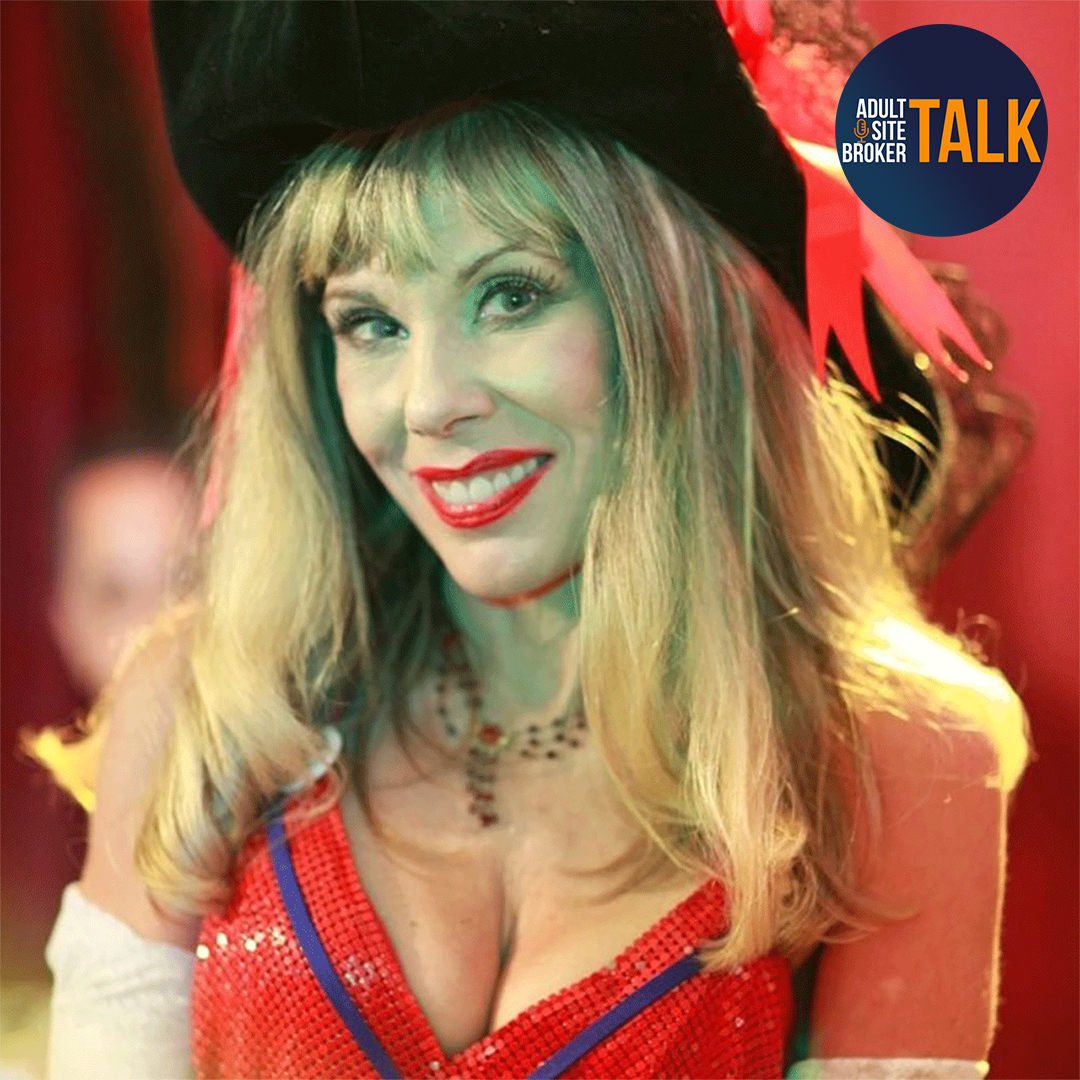
This is Bruce Friedman of Adult Site Broker and welcome to Adult Site Broker Talk where each week we interview one of the movers and shakers of the adult industry and we give you a tip on buying and selling websites. This week we'll be speaking with Dr. Susan Block of the Dr. Susan Block Institute. we've got an event section on our website you can find out all about the events in our industry and get discounts on some events you'll find all that and more at adult site broker.com we're proud to announce our latest project the war on porn.com you'll find articles on age verification laws and other attacks on our industry. It's to raise awareness of our industry's plight in the war on porn. You'll find all that and more at thewaronporn.com. And we're always looking for buyers and sellers of adult sites and companies. Perhaps you've been thinking about either selling your site or buying one. Always feel free to contact us at adultsitebroker.com with any questions you may have. Now time for our properties for sale at AdultSite Broker. We're proud to offer a successful OnlyFans agency. The agency has 15 creators with 90% of them being on salary, so the agency is highly profitable. They handle all aspects of marketing for the creators, including chatting and promotion, with highly predictable acquisition channels. They do paid advertising for subscriber acquisition. In addition to agency operations, the business has developed a suite of custom-built internal tools that represent significant intellectual property and competitive infrastructure. They have a custom content production pipeline built for synthetic creator content using AI with Telegram chatbot integration for pre-funnel fan engagement. It also offers WhatsApp automation. They use a proprietary analytics, KPI, and sales verification dashboard with link tracking, ad performance data, sales verification, and payout automation. All tools are built entirely in-house and don't depend on third-party SaaS platforms. This technology is a great asset for the buyer to own. We have a rapidly growing SaaS-powered OnlyFans chat agency with strong SEO. The company has over 30 clients with very little churn, ranging from around $10,000 to over $150,000 a month. The company continues to grow and innovate. New technical features include an enhanced chatter portal, a new creator billing dashboard with daily billing, and an automated blog system to grow SEO. The company's set up with very little upkeep needed by the owner. It's a cash cow that's still growing fast. We have the largest foot fetish creator site in the German-speaking market. The site is a leading niche platform that's been the number one brand in the market for over three years. The site is highly profitable with consistent revenue and established SEO footprint and strong brand authority in its niche. We have a buyer who's looking for OnlyFans agencies, chatting companies, and OnlyFans traffic sites. He owns one of the top OnlyFans agencies in the world. We're offering a growing free porn gaming site with adult sex games. The site is owned by one of the top entrepreneurs in our industry. We have a premium AI companion platform focused on emotional realism and deep memory. Users interact with lifelike companions that remember every detail, respond with real emotion. They've just added advanced video capabilities. There are more properties for sale on our website. For more information on any of these listings, go to our listings page or contact us at adultsitebroker.com. Now time for this week's interview. My guest today on Adult Site Broker Talk is Dr. Susan Block of the Susan Block Institute. Dr. Susie, it is just so nice to finally have you on Adult Site Broker Talk. It's wonderful. I'm so excited to be here with you, Bruce. It's exciting to have you. Susan Marilyn Block, PhD, aka Dr. Susie, renowned sexologist, sex therapist, cultural commentator, Best-selling author and Yale graduate has hosted the Dr. Susan Block Show and its various incarnations for more than 45 years, earning international acclaim through her trailblazing HBO specials, which helped to shape modern conversations about sex, love, pleasure, relationships, awareness, and human connection. Founded in 1991 by Dr. Susie, the Susan Block Institute helps people to explore and improve relationships, communication, and sexuality through both private counseling and public outreach. The Institute's private therapy practice provides counseling and sex therapy for individuals and couples seeking help with intimacy, relationships, pleasure, and personal growth. The Institute has produced educational content and entertainment for the internet, radio, and all co-produced by Dr. Susan Block's late husband, Max. The Institute has also published numerous books. Dr. Block has also given public lectures and led panels at academic institutions, conferences, and cultural venues worldwide. The Institute has produced many other live broadcasts, videos, and audio tapes, and published magazines, articles, interviews, photographs, music, art, and online media about love, sexuality, peace, free speech, art, politics, and culture. Dr. Susie, how did your Philadelphia upbringing and Yale University education help shape you? Yeah, I'm a Philly gal, Bruce, and I was born and raised in the city of brotherly love. Go Eagles, huh? Yeah, exactly. Go Eagles, go Phillies. A little sisterly love, too, you know. Philly is a great place to be from. Strong upbringing with a lot of heart, character, humility, work ethic, lots of art, literature, and a real sense of American history. Great place to be from, but not a great place to stay, at least not for me. So I got away a little bit, went up to New Haven and got my Yale University education, built on all that history and art and drama. I learned a lot at Yale, graduated magna cum laude. That's not magna cum laude, but I was not a member of Skull and Bones or any secret society, but then that would be a secret. But I did, at some of those wild Yale mixers, encounter a few Skull and Boners. I like that, skull and boners. How did California change you? Well, I feel like California helped me to feel free to be me. In Philly, in New Haven, and even in New York that I lived in for a little while, there were always concerns and constraints on anything I might say or do. I guess in California, I felt I could be anything, a prospector, a poet, a pioneer, a wife, and a really different kind of sex therapist with a show on HBO for a little while. And this unique institute of therapy and sex education. Also, California has the best weather. I'm sorry, our heat is much better than anybody else's. It hardly ever gets muggy here. It's very warm. And there's a stimulating diversity of people. They just don't find anywhere else. Yeah. California is one of a kind. Just got back from a trip there and when I get off the plane in San Francisco, my hometown, and I feel that cool. There's nothing like it. I love San Francisco. I lived there for like three, four years. And then a boyfriend wanted to move to LA. I hated it at first. But LA grew on me and I realized it has even more opportunities and geography and different kinds of people than San Francisco, which I still love. Yeah, yeah, yeah. Yeah, I love the Bay. It's always nice to go back. So you've been broadcasting live on radio, TV and internet since 1984. Wow, I must be old. Nah, that's just a state of mind. Your most popular shows were on HBO in the and 2000s. How has your show changed over the decades and how has the media changed around it? Yeah, I actually started broadcasting on WYBC at Yale, but I was just a student. So in 1984, that's when I got into professional broadcasting. I actually got into a lot of things in 1984, nothing to do with the George Orwell novel, I don't think. But I had just written a book called Advertising for Love about the personal ads, in which I predicted that the personal ads would become huge, because they were kind of popular in 84, but, you know, in newspapers, but then radio, and then TV, and then on the internet, and the internet was just starting around then. So I was, you could say, a bit of a visionary, honestly, if only I'd started up Match.com or Tinder, instead of just predicting stuff like that, I guess I'd be a billionaire. But I was a writer and a broadcaster, and I liked helping people navigate this brave new world of media dating. And I just really enjoyed radio, did KIV, now KRLA, KFOX radio, and 100 stations around the country. And soon enough, the internet. And eventually, I kind of segued once I got my PhDs from matchmaking to counseling people about their love life, both in private, where it's absolutely confidential, and on the show, where it's obviously public. And through the 80s and 90s and early 2000s, as I was starting and developing, it just felt like people and the media were getting more and more sex positive. And I got to say, in recent years, for various reasons, the pendulum has swung the other way. And it's too bad for humanity because sex positivity is mostly very healthy. Every once in a while, it can be bad, but it's like 90% good. And, you know, it happens. My life has changed a bit. So the show has changed. Yeah. How has the internet changed relationships over the years? Because obviously, like you said, when you started out, everything was very sex positive and, you know, people were meeting and all that. But with social media now, it almost seems like it's almost become a replacement for relationships. Well, there's so much sex negativity out there, and people are very, very afraid of sex, both what it might do to them and what people might say about them. It's so denigrated in social media. It's certainly put out there as clickbait, but most of what's put out there are sex scandals, not really sexual help and empathy and understanding. And that's why therapy is more important than ever. Yeah, you're absolutely right. Not enough people getting it, for sure. So you met your late husband, Max, in 1984. There's that 1984 again. Tell us the story of your romance and artistic collaboration and how Max's recent stroke and passing has affected you and your work. Well, like I said, I was hosting this dating radio show. I was brand new to professional radio. And my station director said, go over to this dating service and sell them an ad. And Max was consulting for that dating service and he bought the ad. And so I was successful, very happy about that. Plus, it was love at first sight. But we couldn't express it for various reasons. So we became friends and creative collaborators. And we got to know each other and actually fell more deeply in love beyond that first sight. And got married and stayed married for 33 years until he died. And he was my publisher, producer, co-host. He was my witness. That's what we would call each other. We'd say, you are my witness in the courtrooms of life. And, you know, now that he's gone, I kind of feel like I don't have a witness. It's part of the difficulty. A part of me is grieving so much, I just want to close the door on life in a way. But another stronger part of me is opening the door to honor Max's legacy, in part as a publishing pioneer, as a free speech freedom fighter, And also doing shows like this, just to spread the word about sex positivity and sex education. And I'm very grateful for the support I get from the community of Bonoboville. And I want to carry it on. As Max often said, the show must go on. Yeah. You know, you talk about free speech, and I know you're very much a free speech advocate. Talk a little bit about what's going on in 2026 with not only the assault on free speech, but the assault and the war on porn and on sex, especially in America. Well, there is a big assault on free speech, and it's coming from the left and the right. It's coming from everywhere. It's like people don't want to hear any speech that isn't theirs. One of the true marks of a free speech advocate is that you advocate for the speech of someone you disagree with. And it's almost like people don't want to do that anymore. We used to do that all the time. I still do that. I advocate for people that I totally disagree with, but I'm finding that a lot of social media is kind of closing in on itself and becoming like these little enclaves where you can only talk about things that are acceptable to actually the owner of that social media site. It's funny, there used to be this law called Section 230. I don't know if you're familiar with that. But when I did public access TV, that enabled me to have free speech. That meant that I could stay on the air even if the government didn't like what I was saying. So I was all for Section 230. Well, recently, I found out Section 230 only protects the owner of the social media site. So if you as a user say this or that that the owner doesn't like or that the owner's algorithms don't like, you get deactivated, censored, something. So it's been turned around. It's all about the billionaires now. We got, you know, people used to say that we got to get rid of the woke mind virus. I'm not really addressing that now. But what I got to say is we got to get rid of the billionaire mind virus. They're controlling us and they're censoring us. Yeah. I mean, when you look at some of the media acquisitions and then some of the results, like some of the people who are getting thrown off of television because they don't agree with a certain person whose name I won't mention, it seems like it's only going to get worse. It has been getting worse. I mean, I got to say, like when I started, I kind of technically started as a student in the 70s and then the 80s, 90s, 2000s, really up until like 2014, 15, it just felt like things were opening up. Kink was becoming more acceptable. Yes, of course, consenting adults, very important, then it turned around. And we could point to various things that made it turn around. I think there's a lot of elements, but maybe we could just say the pendulum is swinging the other way. And I hope you and I live long enough to see it swing back to sex positivity. What do we do about that? We just eat healthy and focus on the positive. Yeah, I guess. And vote, right? Oh, yeah. No, that counts. Yeah. Sometimes I'm not sure that that's even going to make a difference because it seems like both sides of the aisle, I think there's one side of the aisle that's particularly moving in a totalitarian way. But I think both sides of the aisle are a problem. I mean, you look at FOSTA-SESTA, and our lovely ex-vice president was front and center on that. And look at the results that's caused. That has been a terrible, terrible plague on the legitimate sex field, let alone on people that are in the margins. I mean, people that are in the margins should be protected, but SESTA-FOSTA really puts them in danger. and it puts other people like you and me in danger. Yes, it definitely does. You have two doctorates in psychology and sexology, and you've been a sex therapist in private practice since 1991. What's your philosophy and methodology for sexology and sex therapy? Well, I believe that sexuality is a vital part of everyone's life, even for those who might identify as, quote-unquote, asexual. but we don't talk about it usually part of that is due to the censorship we've been discussing sexual expression is more and more censored on the internet but it's also always been tough to talk to friends or family about sexual issues intimate issues because you're afraid of offending them or them cutting you off because they're offended so really therapy is a good place a safe space so to speak, to talk about it. And my sex therapy system is custom crafted for each individual or couple. I sometimes consult with couples privately. Now, in public, I'll talk to millions of people, or I might have an event in which there's like 100 people. But my therapy is really focused on the individual or couple, and it usually involves a few steps, confession, exploration, analysis harm reduction adventure that's the fun part and review actually it's all fun all interesting yeah no it it definitely is you know one other question that comes to mind about what's going on today is all of the laws and all of the age verification laws which we know are being masked has something to help children but really are out to quelch sexuality and anything that some religious people especially don't like on the internet. What's your take on all that? Well, it's really an invasion of privacy, let's put it that way. And that's what it's for. I mean, there are many, many types of surveillance that are being perpetrated right now on all kinds of people for all kinds of reasons and excuses. And it's often to protect, so to speak, the innocent, the children. And of course, we do want to protect the children. The funny thing is, though, a lot of these kids know more about how to bypass these things than us older people. Yes. And we're the ones that are stuck because we can't get through whatever barriers they put up. And those barriers are partly digital and confusing, or they might just be such an invasion of privacy. You've always got to get your picture taken for everything, I find. It's just very intimidating, for good reason. No, it really is. And the people that they're really hurting with this, they're not really helping kids, because like you said, kids can get around just about anything. There's another dark side to this, is that if the kids can't access legitimate sites, they're going to find sites on the darker side of the internet where there's all kinds of things that the legitimate pornographers wouldn't touch. Exactly. That's the problem is, I thought, you know, in those years as sexuality as well as pornography, we're getting more accepted. And some people were calling pornography erotica, some people like me, you know, and then they would say, well, if I like it, it's erotica. If I don't like it, it's porn, whatever. It's really just naked people having some kind of sex on camera. So this was getting more legitimatized. The movies were getting kind of more skilled and people were getting a better understanding of it. And then it went into reverse. And now it's just very difficult for everybody from a business point of view, from a morality point of view, from a personal point of view, just people being able to access information and understanding about sexuality. Where do you think it's all going? Into great alienation. I try to fight it, partly with shows like this and just public outreach and also with my private therapy. but you know it's really becoming crazier and crazier people are getting crazy partly because they are so isolated and alienated and the way to find dates is through a dating app i mean i'm not saying bars are so great but when i was young we would meet each other we would get together We would go to clubs and clubs seem right there now, like places for influencers to go to film themselves, mogging others. And they're not safe spaces anymore. I don't know if they were ever totally safe, but that's another story altogether. But at least they were social, you know? Yes. It was like, you know, at least it was a social situation where the girl said, no, I don't want to dance with you. That's an interesting point and something I'm sure you'd like to speak on. Talk about the days of when you and I were kids. God, I sound old when I say that. But where we would go to the clubs and we'd meet people of the opposite sex of clubs. then came the internet and now you've got AI and some of for some of the younger people that's their social circle right and what I feel is that AI has its benefits I use it sometimes to ask questions to get feedback on articles I write I use it to help me when I'm editing a video to fix sound or things like that. But when you start using it as your friend or as your therapist, I guess you're kind of headed into trouble. I think it's okay to talk to it about things, to ask questions, to get information, to talk about your fantasies, your fetishes, your problems. But then at a certain point, you remember you're human and you might need to talk to another human being. Yeah. But there doesn't seem to be enough of that now. Well, there's me. No, I mean, I agree. There isn't enough of it. And people like me, I mean, there are other sex therapists than me. None are as great as me, but you know, they're out there. There's some that are out there that are pretty good. And it's hard for them to get the word out because everybody's censored. A lot of sex therapists are put into a category with sex workers who are put into a category with criminals or something, I don't know, or scandals. And so it's just, we were getting this certain level of legitimacy, just really everybody in the sex field was getting a certain level of legitimacy. And now the backlash has set in, if you want to look at it that way. And it comes from the left, the political correctness, the wokeness, the just incredible, all these pronouns you got to remember. and that's difficult enough but the right i gotta say starts getting into the fascism and into the you know punishments and the serious censorship and the religion religion is almost always anti-sex to some degree unless you're doing it for procreation only so we got it from both sides now and they're trying to outdo each other with how sex negative they can be in a way And, you know, it's really unfortunate, and it's a trap that's been set. But, for instance, getting back to these age verification laws, there are quite a few Democrats that don't agree with them, but they can't come out and say they don't agree with them because then they're going to get painted as, oh, you think kids should be able to watch porn? That's what people say. And that is a function, I guess, of social media that this name calling goes on and people are afraid to speak out. They're afraid because of censorship from on high and they're afraid of being ridiculed or denigrated from down below. Yeah. I mean, what do you think the overall effect of social media has been on relationships and dating? Well, I'm not really going for it these days myself. I mean, I met my husband almost like through regular life. You know, I went over to his office and sold him an ad. This is when I was meeting people at parties, at bars, in the park. And I was just interested in personal lives. I was trying that. And I was meeting guys. And it was interesting. And I thought this is going to get big. This is going to get big. And I thought there's upsides to it. It's convenient. You don't have to leave home. You can do it from anywhere. And yet there are downsides, which is you could fall in love with someone without meeting them. And then when you meet, you realize you have no chemistry. That would happen a lot even back then. Or they're not the person that they painted themselves to be in social media. Well, people have lied since time immemorial. Even when we were young, people were liars. But they can lie more easily. You're right. They can lie more easily. They can lie about what they look like, which they couldn't when we were young. You looked at them. But now, you don't know. They could be using AI on their pictures or using a whole different person. Yeah. You know, speaking of social media, and I don't know if this is something you can still speak on or you can speak on because I know it was a legal matter. but you got into it with Mr. Zuckerberg. I am still in it with Mr. Zuckerberg. I am going to take him to court. I just think he's got too much power, and he exerts that power in a very negative way for our society. If he's going to shut me down because I still don't really know why, but I guess I'm a little too sexy for his shorts, you know? I made him stand up. Maybe his wife got jealous. Priscilla, I'm sorry, but it wasn't meant for you. Just, you know, settle down. I'm not interested in Zuck the cuck. It's okay. That's exactly what I call him. Oh, that's funny. And by the way, I think there's nothing wrong with cuckolding, with consenting adults. But every once in a while, you got to use it as a slur. And that's how I'm using it with Mr. Zuckerberg. He's just, I mean, talk about a lefty that sucks up to the right. And who is he? I mean, he's just in it for himself. You know, it's the billionaire mind virus. And it's funny to see guys that are portrayed as liberal like him. And then Elon, who's portrayed as a Nazi. And they're both just exercising their will over their social media, which we have been sucked into with this idea that our accounts would be ours. Yes, that is a major issue in this world. The media barons are taking over the world, and that's the real scary part. the robber barons, they're robbing us of our lives. I mean, when he took down my accounts, that was 15 years of Facebook material that they had been encouraging me to post and post and post, not to mention relationships, because, of course, like I'm a member of the Yale alumni group, they don't have a Yale alumni group on X. You know, it's funny, the Nazi on X lets me be there, but not the so-called liberal on meta. But, you know, it does deprive you of the public square. It's not fair. What makes you think he's a Nazi? Was that that thing he did with his hand? I guess people call him that. I don't know. I don't know. Yeah, not just the thing he did with his hand, though, but the way he likes all of the kind of pro-Nazi posts. Yes, and politicians. And boost them. Exactly. So the Bonobo apes are central to your work from the Bonobo way to your 12-step program to release your inner Bonobo. Maybe you can talk besides answering this question about what that is for those who don't know and how have Bonobos influenced your thinking and therapy practice? Okay, well, that's a good question. What do Bonobos know that we don't know? And I pronounce it Bonobos. I have to say other people pronounce it Bonobo, but I learned Bonobo. That's how they say it in Africa. And yet I know in many different cultures. I don't want to offend the Bonobos who are listening. I'm sorry. Right. That's true. And they do listen. But yeah, they are native to the Democratic Republic of Congo in the second biggest rainforest in the world. And what do they know? What is it about them? Obviously, they don't know how to code or do social media, but they do know how to avoid murder and war, which is, by the way, engaged in by common chimps and all the other great apes, and most of all by humans. But bonobos don't kill. They fight, but they don't kill somehow. How do they do this? And can we do it too? Well, your listeners, and you might be interested to know, that bonobos appear to keep the peace by having a lot of sex. And that's not just procreational sex that, of course, all creatures pretty much have, most, almost all. But bonobos have a lot more recreational sex, non-reproductive sex, just helping themselves feel good and loved and chill. they have intercourse as much as anybody, but they have a lot of outer course. They do a lot of licking and touching and fingering and massaging and playing. They love to play. I think they do role play. Bonobos make love, not war. They really are the make love, not war chimps. And another key is female empowerment. That's right. NILFs rule Bonoboville. So the older women are very respected, But the males are treated very, very well. There's a lot of nurturing and loving of the males. There are no bonobo incels, okay? And that's another thing that is plaguing our society is incel women. Lord. Right. It all comes out of a lot of what we're talking about, but it's a very specialized group of mostly young men. So bonobos also share a lot, and we need to learn more about sharing to combat this billionaire mind virus. There's a hierarchy, but one bonobo doesn't hoard all the bananas. And caregiving, caring and caregiving. I really learned a lot from bonobos about how to care for Max. In that last awful year of life, I learned a lot about love. Interesting. I mean, how did you come upon them? Well, it's funny. Max and I had been married one year. It was 1993. And we were hanging out in bed watching TV. People watched TV back then. And we were watching PBS and saw a series called The Nature of Sex. Of course, I had gotten my sexology degree. I was starting to do therapy. We were very interested in this. And so we're watching all the different animals and humans. And then we see on the last episode, bonobos. And we were blown away. It was like we were seeing our long lost cousins, but with a lot more hair. Anyway, they were just so kind of charming. And then we visited them in the zoo. Okay. Okay. You didn't actually go to Congo? Not to Congo, not yet. I would like to, but I've been to the zoo many times. I do consider the bonobos at the San Diego Zoo to me my second family, maybe third. And they're our closest cousins. I call them our kissing cousins because they love to kiss. But they are very close to us. They are 98 point something percent genetically similar to us humans. Wow, that's wild. what's the relationship between the public and private sides of the dr susan block institute yes that's very important we got to have our public side and our private side public is like we're doing right now we're doing a show or writing a book or doing just a lecture private is personal sex therapy and it is absolutely confidential and a lot of people need to know this because they hear me on my show and then they want to talk to me privately and they all often ask, are you on the show now? No, I am not on the show when you talk to me as a client in therapy. It's amazing people would ask that, but I guess if they're used to the media side of you, they want to make damn sure it's not on the air. Yeah, I get it. I understand. It's why I kind of want to put it out there as much as I can without being too repetitious. But yeah, they want to know that. They need their privacy. And so much in our society right now, you think you're private and you're not. Yeah, if you work for Zuck now, your keystrokes are going to help train AI. How about that? Well, that's true. And just so much about what we do. Texting, even. It's not private. I kind of think that just talking on the phone is probably a little more private than a lot of forms of communication these days. Yeah, yeah, most likely. What are the most common issues that people bring to you in private sex therapy? And how do these compare with what you talk about on your shows? Also, how has that changed over the years? I'm sure it has. Kind of. But really, the most common first question people ask in therapy has been the same since I started. Am I normal? People want to know. Am I normal? Am I okay? Either because of thoughts or because of something they've done or because of something that was done to them. And this is always what people are concerned about when they're in private therapy. And they may ask it at the beginning, but they usually ask it after they've told me something about their fetish or their interest or whatever it is that makes them want to call. And then they want to know, am I okay? And in private therapy, this is very important. They want to talk about themselves, their deepest secrets that they can't talk about with anyone else. And on the public shows, they actually get into similar issues about fetishes and fantasies and stuff like that. Maybe they talk about scandals a bit, which they don't really in private therapy. On the public show, they might talk about famous people. And when they talk about an intimate issue, they don't frame it as being about themselves. They say, my friend has this problem, or I saw a video about this fetish or whatever. so you know people have their way of shielding themselves on shows of course everyone has an uncle who lives in thailand by the way just to let you know i think i do actually for real you see i'll talk about that some other time you see i wasn't you see i wasn't kidding one of your sex therapy specialties is helping clients to handle their erotic fantasies what is the erotic theater of the mind and how can we use it to improve our lives? The erotic theater of the mind is a movie theater right between your ears, inside your brain. And it's actually a multiplex. And it's always playing shows of your past and perhaps your future, as well as many parallel universes where you are whoever you want to be or perhaps you are who you are afraid you are. It's a more or less safe space to explore. It's private. It's in your mind. Until they put chips in our heads, it's private. Though it can be scary, which is why it's good. It's healthy to explore with a therapist, a good therapist guiding a client through the erotic theater of the mind, through guided exploration, through role play, through hypnosis, to play and explore and remember things or think about what they might want to do in the future, it can be quite eye-opening. Sometimes it tells you, no, I don't really want to do that thing. I just want to talk about it. And in any case, it's often incredibly healing. Yeah, I would imagine it would be. why do things like cuckolding, bisexuality, cougar, milf, and mommy fantasies resonate so strongly in modern culture? Should I assume this has something to do with porn? Well, I was going to say these are some of my favorite subjects. So I guess you could say it has something to do with sex therapy, but you could also say it has something to do with porn. it has something to do with humans. I mean, all of these interests are somewhat taboo, and porn presents them in a certain way, and your mind, your erotic theater of the mind, might present them in a different way, or maybe it reflects the porn. It depends. Now, according to most religious folks and conservative folks, and maybe folks that are incredibly politically correct on the liberal side, find this very taboo. And you shouldn't talk about it. You shouldn't do it, certainly, or even talk about it. But it's funny. Most people love the taboo. And as you make something taboo, it not only makes the person that was already interested in that thing still interested, because just because you make a taboo doesn't mean it's going to disappear but it also excites other people who just like it because it's taboo and so this is something we explore in confessional or analytical therapy and also in the erotic theater of the mind actually acting on these fantasies breaking these taboos in real life can be very risky but exploring them in therapy is not so risky you could you know have a breakthrough that It was shocking, but it's pretty safe. And one thing I should say, at least all of the taboos that you named appear to involve consenting adults only. So that's very key. Yeah. Last question, you know, we talked, I just referred to porn, and obviously that's the world that I live in, brokering adult websites. What is your take on the state of the adult entertainment industry today versus, say, 15, 20 years ago? Well, 15, 20 years ago, what I associate with that is my friend, Axel Braun. And his father, Lassie Braun, was my friend first. And actually, Axel is the first person to help me to squirt. And he did that on New Year's Eve 2000, right between the millennia. So that's a little bit of going off the road there. But I will say after he did that, he got into porn directing. At that point, he called himself the G-Man. But then he got into porn directing and he was doing a lot of these parodies of regular movies. And they were full productions. And of course, his dad, Lossy Braun, had done a lot of full productions, not really parodies, but production values. And that was very important back then, 15, 20 years ago. And then I guess that became less important. And clips, as people got more onto the Internet, they just wanted to see a clip of their fetish, whether that's squirting or big boobs or cuckolding and usually very extreme cuckolding. I could talk about that if you like. But in any case, a clip takes the story away, pretty much. It's just about an action and usually very, very hardcore and not about the romance, not about the questions, not about the character. So that's what porn got into. And then it got taken away from even the directors with OnlyFans. It became something that you do by yourself or with your friend, your boyfriend, your girlfriend. And you do this, you make money. That's all great. I think there's a lot of good sides to something like OnlyFans and all the other ones. I'm sorry, I don't know all their names, but there's a whole bunch of them. There's something great about that. But it does mean that it's very much kind of this vanity kind of industry now that is all about the particular character, the particular OnlyFans model or star, you could say. So it's more of a star-focused thing. And I guess there's a lot of benefits to that. Maybe the stars that are at the top make more money, but there's less money for other people. That's very true. Yeah, it definitely has changed the powers gone from the producers to the models slash creators, which that's really democratized it, which I like. Okay, we're just not just a few people are in charge of it. Now, if somebody wants to do an OnlyFans, they can get on there. And if they work hard, they can make money and on their own, which I think is fantastic. How about, I don't know about the content, but how about the types of porn now versus before? Well, I'm not an expert in all the types of porn. I guess what I said before is probably still true, which is that they're not so focused on stories. They're more focused on a fetish. And the models that do the best maybe have this particular body part that's really exciting to a lot of fans. And they focus on that body part or maybe it's an activity that they do. And it's a specialty. It's not so much about movie making as it was. It's more about a specialty. No more behind the green doors. Growing up in San Francisco, behind the green door, and God, Deep Throat. Deep Throat. Deep Throat. Just celebrated his 50th anniversary a couple years ago. I was moderating a panel with Nina Hartley and a few other people, and it was really kind of sobering to consider how things have changed. I mean, I remember seeing Deep Throat on a date in a movie theater with a lot of people. It was a group activity. Indeed. That's how you watched it. Unless you bought the film. Because they didn't have the tapes back then. Really? Then they didn't even have it on video. No, exactly. When Deep Throat came out, it was the 70s. That's right. I know. My childhood. Definitely. Again, growing up in San Francisco, that's where it all happened with the O'Farrell Theater and the and the the oh whom I think I have the guys who started the brothers yeah yeah the old brothers but I'm trying to think didn't one of them kill the other or something like that one of whom killed the other yes indeed should make a good movie someday for sure well someday Dr. Susie I'd like to thank you for being with with us today on Adult Site Broker Talk it's a real pleasure and I hope we'll get a chance to do it again soon can I give out my phone number yeah Absolutely. Give out your information, please. Yeah, yeah. Because, I mean, you can go to my website, drsusanblock.com or drsusanblockinstitute.com. Or you can just call us and we're open 24-7, 213-291-9497. We have human beings. When you're tired of the AI, talk to a human. It's not a bot. Thank you very much, Dr. Susie. Thank you so much, Bruce. My broker tip today is part one on how to buy a site. The first question to ask yourself is what kind of site would you like to buy? Would you like a tube site, a cam site, a dating site, a membership site, a social media site, or something else? If you want to buy a membership site, what type of site do you want and in what niche? There are literally hundreds of niches and many sub-niches. For instance, let's say you want to buy a gay site. Under gay, there's bears are mature, bareback, Asian, Latino, amateur, bi, black, euro, and fetish, along with many fetishes under that classification. Plus, there's hardcore, jocks, porn stars, solo, trans, twinks, and uniforms. Straight has even more sub niches. I can't tell you how many people contact me and just say, I want to buy a site or I want to buy a pay site. I need more information than that. How you make this decision should be based on these factors. What interests you? What you enjoy should definitely play a part in what you buy. If you like men and want to make money on a straight site, that's probably a really bad idea. Same thing if you're straight and want to buy a gay site. So what you like plays a part. What's your budget? This is something you need to establish at the very beginning. Not only do you need to know what it is you're working with, but some classifications of sites are more expensive than others. For instance, if you want a cam site with any traffic or revenue at all, you're going to need a lot of money. In fact, to buy any established and successful site will be somewhat expensive. If you buy a site that's pretty much just a platform without traffic or sales, you're going to need a huge investment to build it up. In that case, it might actually be as good or better just to start your own site. That way you get exactly what it is you're looking for. We'll talk about this subject more next week. And next week, we'll be speaking with Mike Stabile of the Free Speech Coalition. And that's it for this week's Adult Site Broker Talk. I'd once again like to thank my guest, Dr. Susan Block of the Dr. Susan Block Institute. Talk to you again next week on Adult Site Broker Talk. I'm Bruce Friedman.

 Featured
 Featured
 Featured