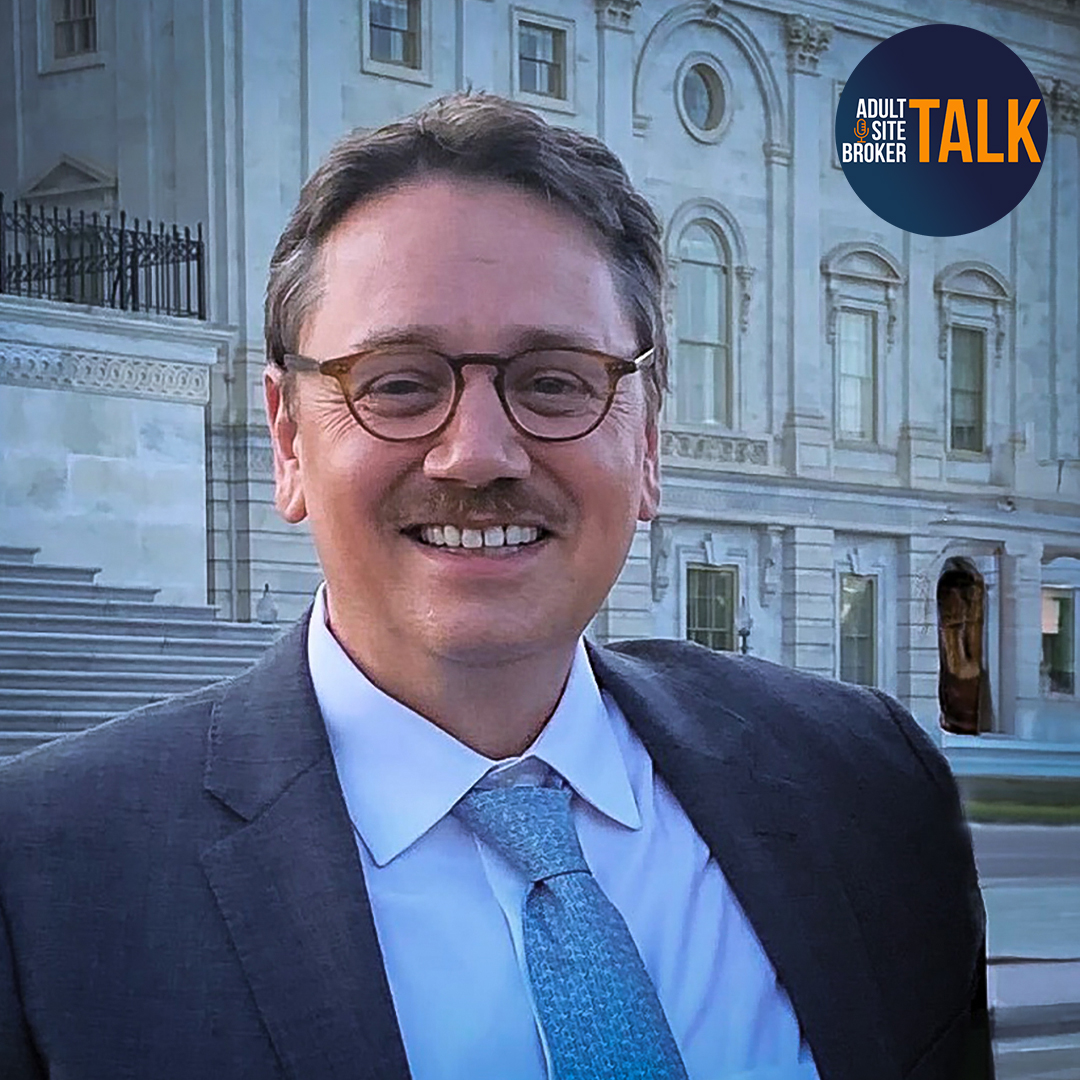
This is Bruce Friedman of Adult Site Broker, and welcome to Adult Site Broker Talk, where each week we interview one of the movers and shakers of the adult industry, and we give you a tip on buying and selling websites. This week we'll be speaking with Mike Stabile of the Free Speech Coalition in part one of a two-part interview. We've got an events section on our website. You can find out all about the events in our industry and get discounts on some events. You'll find all that and more at adultsitebroker.com. We're proud to announce our latest project, thewaronporn.com. You'll find articles on age verification laws and other attacks on our industry. It's to raise awareness of our industry's plight in the war on porn. You'll find all that and more at thewaronporn.com. And we're always looking for buyers and sellers of adult sites and companies. Perhaps you've been thinking about either selling your site or buying one. Always feel free to contact us at adultsitebroker.com with any questions you may have. Now time for our properties for sale at Adult Site Broker. We're proud to offer a successful OnlyFans agency. The agency has 15 creators with 90% of them being on salary, so the agency is highly profitable. They handle all aspects of marketing for the creators, including chatting and promotion, with highly predictable acquisition channels. They do paid advertising for subscriber acquisition. In addition to agency operations, the business has developed a suite of custom-built internal tools that represent significant intellectual property and competitive infrastructure. They have a custom content production pipeline built for synthetic creator content using AI with Telegram chatbot integration for pre-funnel fan engagement. It also offers WhatsApp automation. They use a proprietary analytics, KPI, and sales verification dashboard with link tracking, ad performance data, sales verification, and payout automation. All tools are built entirely in-house and don't depend on third-party SaaS platforms. This technology is a great asset for the buyer to own. We have a rapidly growing SaaS-powered OnlyFans chat agency with strong SEO. The company has over 30 clients with very little churn, ranging from around $10,000 to over $150,000 a month. The company continues to grow and innovate. New technical features include an enhanced chatter portal, a new creator billing dashboard with daily billing, and an automated blog system to grow SEO. The company's set up with very little upkeep needed by the owner. It's a cash cow that's still growing fast. We have the largest foot fetish creator site in the German-speaking market. The site is a leading niche platform that's been the number one brand in the market for over three years. The site is highly profitable with consistent revenue and established SEO footprint and strong brand authority in its niche. We have a buyer who's looking for OnlyFans agencies, chatting companies, and OnlyFans traffic sites. He owns one of the top OnlyFans agencies in the world. We're offering a growing free porn gaming site with adult sex games. The site is owned by one of the top entrepreneurs in our industry. We have a premium AI companion platform focused on emotional realism and deep memory. Users interact with lifelike companions that remember every detail, respond with real emotion. They've just added advanced video capabilities. There are more properties for sale on our website. For more information on any of these listings, go to our listings page or contact us at adultsitebroker.com. Now time for this week's interview. My guest today on Adult Site Broker Talk is Mike Stabile of the Free Speech Coalition, Polari Media, and SWR Data, and who the hell knows what else. Hey, Mike, thanks for being back with us on Adult Site Broker Talk. Bruce, always a pleasure. I am always happy to talk with you. It's always great talking to you. Mike is a journalist and documentary filmmaker with over a decade of experience advocating for sex workers and sexual freedom. He's also the founder of Polari Media, a media strategies firm serving the adult industry, as well as SWR Data, a market research firm focused on the creator economy. Mike also serves as the policy director of the Free Speech Coalition and has been on the front line of the fight to protect First Amendment rights of those who work in the adult industry. And I want to say thank you for that. Over the past several years, Mike has become intimately involved with legislators at the state and federal level, working to stop government censorship and promote policies that support the industry. The Free Speech Coalition, the trade and advocacy organization for the industry, has led the fight against poorly designed age verification bills and is currently working to advance legislation, that's not a hard word, that would keep minors from accessing adult content online. That was easy. Okay, Mike, how has the political battlefield shifted since we last spoke? Oh, I mean, in so many ways, right? I think that when I look back, maybe the last time we talked was in lead up to the 2024 election. Let's not talk about that. Well, you asked me. Okay, okay, go ahead. You know, we had, I think that, you know, I'd have to go back, but we still had, you know, the Supreme Court was out on age verification. There were lots of things that were bubbling up, you know, and now I think that we're confronting a radically different playing field, meaning that, you know, politically, you know, we've always been sort of politically homeless as an industry, right? There's nobody's jumping at the bit to stand up for us. But it is a certainly a more hostile administration. And I think that there are a lot of people who feel really empowered to go after, you know, not just adult content, but anything related to sex or sexuality. And so I think that we're seeing a crackdown, you know, across the board. And I think we're also seeing a lot of one of the things that I've noticed has happened in the past year or so is that other organizations that traditionally would fight alongside us, you know, are sort of dropping out because they are overstretched. You know, they have, they're fighting so many different battles and so many different fronts where they're fighting, you know, if you're looking at like ACLU or FIRE or, you know, EFF, right? They've got the universities, they've got social media, they've got, you know, libraries and things like that. And I think that they're busy, you know, we get this thing that, you know, I think that Steve Bannon sort of advanced, you know, for a long time, which was to flood the zone, right, to really sort of overwhelm people. And I think that in some ways that that's been effective, right? Nobody can really concentrate and nobody can focus. I think that following the Supreme Court decision, you know, they basically, the court basically said that Americans don't have a right to access content for age verification, you know, or without age verification. Now, that's narrowly focused on the adult industry, theoretically, you know, that that was the case was was free speech coalition v. Paxton. But what we've seen is that that case has then been cited in the social media bans. It's been cited in, you know, in other contexts to try to advance more onerous regulations and censorship under the guise of protecting children. And I think that when I look back, I mean, Allison and the FSC team, and frankly, you know, our allies in the civil liberty space have, you know, sort of saw this coming. But there were a lot of people that could have joined the fight earlier, right? I think about groups like NetChoice. I think about, you know, the tech industry, you know, who during the process of age verification, as we saw in advance, basically said, you know, it's all right for adult, just don't come for us, right? We are fine with this law that's being pushed, so long as you carve us out of it. And what happened was, they didn't stand up for the right, they tried to throw us under the bus. And what happened was, they got a ruling that now is So it is a more hostile environment. I think that and then that's sort of the bad news of it. I don't think that that's a surprise to anybody. I think that the bright side of the silver lining is that I think that people are much more aware of the threat right now. Right. I think that prior to Paxson and prior to the last election, I think a lot of people said, well, you know, FSC and some of these other groups, they're really just chicken little. Right. They're saying the sky is falling. You know, nothing's going to change. You know, they can't regulate the Internet. They can't do, you know, what they're saying. They can't get rid of Section 230. Yeah, exactly. They can't do any of these things. And I think now that they see that they can, and they still, you know, encounter sort of that Pollyanna-ishness online. You know, people say, well, they can't get rid of VPNs. They can't do this thing. You know, they can't regulate people out of state. But but in fact, they can or they can try. Right. They can they can do all of these things to harass you. I think that that one of the lessons that we've seen over the past couple of year, year and a half with this administration, you know, is that they throw a lot of things at you, you know, and a lot of them, you know, maybe even the vast majority of them get turned around in the courts. You know, they get they get rejected and, you know, maybe they follow the courts, maybe they don't. But, you know, in the meantime, you're sort of left fighting these things. And so I think that we're looking at a more aggressive paying field. I think that people in our industry are taking notice. I know that certainly, you know, with the rise of age verification, particularly in a place like the UK, right, which is not us, but it's a little bit more discreet and sort of measurable, you know, people can see what happens when they turn on age verification. And the vast majority of people, we can see how it's hurting creator incomes. We can see how it is hurting platforms. And these aren't things that people are just going to get around. And I think that we've done a lot of this. I think that we've also, I think the other thing is that just, you know, our muscles are stronger now. You know, we've been fighting this. And I will say that, you know, you're getting, I'm glad we're having this conversation now because we just came out of a fairly successful legislative session this year. We were able to stop bills in multiple states. The U.S. has sort of passed these laws in most of the red states that they have. And so we're looking now at, you know, they're trying to push forward into blue states or purple states. And we've had a lot of success fighting that we were able to secure a veto from the governor in Wisconsin. That was hard fought. We were able to stop a bill in Washington. We were able to, just this morning, I got an update from New Hampshire, where, you know, a committee that we had been actively talking to and trying to educate them on the bill, you know, stopped it. you know, said, I, we're not, we're, this is, this is not passing. And so I think that those shows the value of us going into those spaces. I think that we have been one of the victories that I am really proudest of this year is that in Arizona, we had a bill that was really aggressive towards the adult industry. It was a sort of the person who had built the age verification mandate came back and he said, okay, for everybody who's going to upload content online, you need to have age and consent documents, and it has to be, you know, sort of in this format. And you have to, you know, use this, lots of sort of onerous things, right? Things that are sort of like good, positive, whatever, you know, and I reached out to him, this is somebody who's not friendly with our industry, you know, who does not think that I don't think he thinks we should exist. And I said, you know, your bill, you know, we're the only industry, we're the only part of the internet does all of these things, right, that does verify the age of our performers and does verify consent. And the laws that you're creating will actually harm it. And we were able to get amendments and fixes there that were tremendously helpful. And I think that, again, it is when we first started this a couple of years ago, there were so many people in the industry who said, you know what, nobody's ever going to listen to us. You know, we have to act like pirates. We'll get around this. We'll figure out this. Maybe there's a lot of people who still sort of act like that. I even heard attorneys say don't comply with age verification. You know, I mean. That was then. Yeah, it is. I mean, it is a lot of people have ideas about how this works that are theoretical. And in reality, like, you know, I just saw this morning that, you know, X videos settled with Florida, you know, for a million dollars. Right. So I think that there's a lot of people who are armchair warriors and a lot of people who are, I mean, this is, I mean, Bruce, you know this, right? This is a cowboy industry. This is an industry that, you know, it's made up of people who don't follow rules elsewhere. Right. I don't mean that they don't follow legal rules, but they are used to being independent and going their own way and forging things like this. And I think that there's a sense, we don't have to do any of this and we'll figure out a way around it. And this is so stupid. And it is so stupid. But when you're faced with a massive lawsuit and it impacts your business, you have to come up with something. So that's, I think, where we are. Yeah. I mean, is that your sense, too, of where we are? Absolutely. I mean, I've been amazed at what the Free Speech Coalition has been able to do to help oppose this. And, of course, when you've got people like Brad Mitchell who contributed in the Supreme Court fight. And, I mean, the industry is finally, to some degree, pulling together when it comes to things like age verification. We have to. Oh, and by the way, I should mention we're recording this May 15th. That's the day that the X-Videos lawsuit was settled. So, and it will run July 7th. So, what has the fallout been from the Supreme Court decision a year ago? Again, the biggest thing is that people understand that this is a threat. I think what we've seen, right, in the wake of that decision is we've seen a lot of states try to go further. And we have, you know, any number of states that are trying to regulate social media content for kids. We have a number of states that have pushed forward other types of bills. I mentioned the Arizona one, but certainly bills that attack our industries. You have things like the North Carolina bill, which requires that you have that your consent document, you know, the model release that people sign, list out every sex act and that you can withdraw your consent after the shoot is done. So, you know, I shoot a film in North Carolina or I'm North Carolinian and I shoot it somewhere else. Who knows how this this all works? It's also very vague. But you see that, you know, then you can say, well, yes, I got paid, you know, two thousand dollars for that scene. But it's the next day I'm withdrawing my consent. The contract is valid. That's a you know, that that is not just about porn. That's a you know, that's contract law in the U.S. And I think that we're seeing people feel emboldened. I think the other thing that we're seeing, and this happens in the conversations that has happened in conversations years, year after year after year that I've had with legislators, right? We have gone in there, Allison and I have gone in there, you know, our allies have gone in there and said, listen, these laws just don't work. They are not going to work. What happens is, is that people are going to go to sites overseas that are not compliant with these laws. They are going to use VPNs. This is what we're seeing already. Like, we know that I understand this is a great idea, you think, in your head. I understand that there's multiple ways to get around them. And so they design these laws that we know are bad. We go forward with them and we say, like, this is not going to work. And then it doesn't work. Right. Surprise. And by the way, what was the was it the EU app that they found out that they could hack into or they could in 10 seconds or something? Yeah. Yeah. I mean, it was just it is these places leak information. Right. We have seen multiple hacks of databases because, you know, guess what happens? say there was one with discord right discord was using an age verification provider uh i don't know i can't remember who they were if not i don't i don't want to get in trouble but yes you um but the third party verifier may well be solid right they may be doing everything right we never know because the audits are vague if they happen at all. But what happens is that people get denied. And they say, well, wait, I am over 18. Here's my ID. And what do they do? They send it to them. We have this happen. This happens at Free Speech Coalition with some regularity. You know, someone will come across a, they'll be in a state where there's age verification. They will not be able to access a different site. And maybe somebody on that site says, hey, listen, if you want more information about why we're doing this, Visit freespeechcoalition.com. Well, people think they think it's us. They think Free Speech Coalition is blocking. And so what we get is either angry phone calls. God damn it. You get me. Let me get that website. I'm 65 years old. I don't need to, you know, you get that sort of stuff. Or someone emails you their ID. And you say, well, I do not want this. You delete. That's, you know, it's just people are getting a lot of information. So, yes, there's that. I mean, the UK, the European Union app that they were so proud of immediately, somebody was able to break into it. You know, what we're seeing now is the states say, oh, wait, we don't think that it's good that people should be able to get around this so easy with VPNs. So what we're going to do is we're going to ban VPNs, you know, or we're going to acquire age verification for VPNs. And it just creeps and creeps and creeps and creeps. Right. Rather than saying, hey, listen, this was a flawed idea. What they want to do is double down. And what you end up getting is a lack of anonymity on the Internet. Right. They're cracking down on all of it. And I think that this isn't just about porn. This isn't just about sex. One of the ways in which I see this work is that in states. So, you know, most states have focused on adult content. Right. They have this standard. They say it's 33 and a third percent material harmful to minors. Well, that generally excludes people like Twitter slash X. It generally includes Reddit. You know, even though they've got adult content, they're off the hook. Not all states have that, though, right? Some states have a 0% standard. If you allow it at all, you need to age verify, etc. There's a handful of states that do that. What's crazy is how different they all are. Yeah, it is a patchwork. Oh, my God. It's crazy. What impact has the current administration that won't be named had on policy toward adult and more specifically age verification? It's interesting. It's a mixed bag, to be honest. I think that what we've seen is support, or I think that this party tends to march in lockstep. So we're seeing a lot of push on protecting kids and cracking down and going after people they don't like and allowing people we don't like. I mean, when I was talking about Reddit and Twitter and Blue Sky last, a few seconds ago, you know, one of the things that has stood out is that in states that have passed, they don't have these standards, right? They don't have a 0% standard. Twitter just ignores it, right? They don't age verify at all. The owner of Twitter is a pretty good connection. Yeah. I mean, I think that that's sort of it. And Blue Sky does, right? So you have a platform that is left-leaning that has to either surveil their users or block them. And then you have a platform that as part of their business model has content creation, has explicit content creation, and they don't face any barriers at all. So we're seeing some lopsided enforcement in that regard, right? People know, if you were on this side, politically, you don't really have to fear, nobody's going to come after you. If you're on the other side, well, you better take every precaution, and they still may come after you. So that's part of it. I think that we have seen this, you know, a mixed signal in that when the UK introduced their online Safety Act, you know, it was to protect minors from, you know, adult content, but also, you know, hate speech and violence and stuff like that. And what we saw was immediately after it went into effect, a lot, you know, a number of right-wing news sources got flagged for engaging in, you know, this sort of harmful conduct. And that really made the right in the U.S. angry. And they had hearings in the Congress, you know, about what is going on and like we need to have more tariffs on them and we're free speech, right? Meanwhile, they're going after adult content that to them is not speech. But, you know, we're seeing a lot of that, right? We're seeing a lot of that. We did have the administration issuing guidance that seemed to imply that device-based verification was going to be more effective and they didn't think other states. So we're, you know, again, we are politically homeless as usual. It's not a coincidence that the states where this has passed, where age of verification has passed in the U.S. are almost entirely red. I don't mean to imply that we are favored in any way on the right. You mean the left? Yeah. Well, we try to figure out where we can make deals and where we can educate people. And if part of it is saying, hey, listen, what you're trying to do in this state is protect minors. Well, this is what's happening in the U.K. You didn't like that. So let's talk about a more effective way to do it that doesn't have it. I have, as you know, Allison, a lot of people I work with now, I have a post it on my post it on my desktop that I look at every morning. I put it there, I would say, probably in some point in 2024. And it says, do not expect them to be ideologically consistent in any way that don't expect because they've had hearings there that they're going to be like, oh, yeah, of course. Well, certainly age verification here is bad. But, you know, I can't count on it. But that is always be aware, always understand that like we are disposable and that's to either party and be pragmatic. Try to find solutions where you can. They're not always we don't have the luxury of saying, hey, listen, these people are going to defend us. No kidding. So, you talked about this before, and it bears repeating that the FSC has had some really great victories in the past year, stopping age verification bills in Washington, Wisconsin, New Hampshire, Colorado, and others. So, FSC plays its cards pretty close to the vest during the legislative season. Maybe now you can tell us a bit about what's been happening behind the scenes. You know, I think that what we have been effective at doing is one, pulling groups together, right? And sometimes those are groups that are radically opposed on other issues. You know, I think in the case of the Washington bill, we had, you know, ultra left leaning privacy groups, we had, you know, LGBTQ groups, right? We had and then there were also sort of, you know, I think there was a group called like conservative moms against censorship, you know, there was you get in these hearings, and you see who's there. and you try to understand and you try to make alliances where you can. Yeah, try to find some common ground. Yeah. I mean, I think that it is, I think that people think that common ground is about compromise. And common ground is about practicality. And I think that there are a lot of people on the right who have concerns about government surveillance, right, who have concerns about censorship. I think a lot of them haven't thought about pornography as the canary in the coal mine. I think a lot of them haven't thought about, you know, the ways and the ways this could be used against them. And I think, unfortunately, we're in a moment where people, particularly on the right, don't think that anything's going to be used against them. They think they're here for a thousand year regime, you know, but this is the way that it happens. And so there are concerns about surveillance. There are concerns about the power of the state and how it can be turned against you. And I think that those are conversations that you have to have. I mean, I think that in New Hampshire, we had a bill, you know, this is New Hampshire is a fairly conservative state. You know, during the last election, they tilted even further to the right. They were more of a true, you know, they live for your day. Right. They were New England Republicans. Right. They were a little bit definitely libertarian. And, you know, I talked to someone after the last election. I said, you know what, we're it's much more lockstep MAGA right now. So, you know, there are still people here and we still are our own state. But, you know, I got to tell you, the scenario is a little bit different than it was 12 months ago. And so you get in there and again, you try to highlight, listen, hey, listen, the Trump administration is saying that they don't think that this is an effective way. You know, this is what happened in the UK. You know, we don't really want that here. And, you know, most importantly, there's a better way. There's a way that we can go about it that can accomplish what you want, but doesn't have this. And I say all the time when I meet with Republican legislators, sometimes with Dems as well, they say, I know you may hate me. You know, here, listen, nobody likes the porn industry. You know, I'm coming in, you know, I try to be affable. But I was like, listen, you may think whatever we do is terrible. I'll disagree with you. I think it is important societally. But we can agree, you know, even if you don't think it should be protected, we can talk about, hey, if you want to protect kids, I will tell you what is effective. I will tell you what's not. We are the experts on this. We've been living this past couple of years. I will tell you when it works. And that, I think, opens up eyes. I think we went into Wisconsin. I flew up to Madison. I met with, primarily, I think, with journalists, legislators on the right to talk about this. And, you know, later, listen, this is the way that you want to do it. Like, this is not working in other states. And that was something that has been a drumbeat this year. And I think that was effective to say, this isn't the way that it's going. This isn't the winds of shift. This is from two or three years ago. It didn't work. It just pushed kids to different states. Well, the dark part of the Internet. Yeah. I mean, in the dark part of the Internet, it's not hard to find. We were happy this morning. There was a – we got that defeated New Hampshire, and they published sort of the rationale in the – I think the House Journal, the Register, whatever it is that they sort of publish it. And they said, listen, these laws haven't worked. And the, you know, the trade association for the adult industry, the free speech coalition came in and explained, this is what happens. And I think that that's, that's very satisfying for us, you know, to understand that we are seen as an authority here and that we can be seen as a partner. And they're actually saying, yes, you are an authority, right? Yes. And that, that is different from two or three years ago when we first started doing this, I would fly to, you know, Arizona or we'd fly to Sacramento or whatever it was. And I would testify before a committee and I would say, listen, we know what we're talking about here. Like, you're trying to regulate us. I know more about this than any, not in a cocky way, but I'd say, listen, you know, I'm here as an expert. I can tell you, you know, people would come in and testify about what the Constitution says or doesn't say. They would talk to you about what the tech does. And I would say, listen, I've got to tell you, this is my life's calling. I mean, you know, I know more about this than anyone. I'm happy to answer questions. And it would be crickets because they don't, they didn't want any answers. They thought they already had all the answers and they didn't need to hear from this shill from big porn. And now I think that they see, God, these laws were sort of dumb. You know, they didn't work. And if you can help us, you can help us. We've had conversations in New York, you know, talking with legislators about device-based solutions that could work. We got called into a meeting and that, you know, these meetings often go half hour, right? You're lucky if you're not getting shoved out the door at the 15 minute mark, right? in DC having a conversation in the hall because, you know, they don't want you to come into the room. But, you know, we ended up having a meeting that went three and a half hours, you know, and they, hey, can you help us? Hey, it seems like you've, you know, we were there with, I was there with A-Lo and, you know, they know the space as well. And they were saying, hey, listen, could you help us? You know, how does this apply to what my kid is dealing with in Roblox? Wait, you mean you can flag this and this and this? And why are we doing this? And like really being seen as an important partner in this. Well, that's good. I mean, I look at the situation with the Brazil laws and an actual association of adult companies got together and they had a seat at the table in designing the law. You would like to hope that for future such laws, we would have a seat at the table. Do you think that's even possible? I think so. I think that only because they fucked this up so bad you know that they've sort of seen like oh we were so cocky we thought this was gonna how it was gonna work and we got told that by these other groups that this was just simple and it was just about sort of flipping a switch and it wouldn't hurt traffic and we could protect it you know and suddenly i mean everybody again i hate to be like cassandra because you know we we screamed about this for years and tried to tell people and they were like what are you talking You can't age verify just children, right? You have to age verify everybody. And by age verification, it is not something that it magically knows how old you are. It's not, you know, I remember my, when I was a kid, we had this game, it was called Leisure Soup Larry. And it was like one of those things where, you know, it was like a, you know, a disc and maybe it was even a cassette tape at some point, you know, but it was like something we would upload was, you know, TRS-80. And it wasn't quite a sex game, but it was, you know, it was this guy trying to get laid. I used to wear a leisure suit and try to get laid. Yeah. All right. It could have been a leisure suit, Bruce. I can relate. I'm old enough. So, you know, they had a, I was going back, they had an age verification thing and their age verification was all, you know, it was sort of tongue in cheek, but it was sort of like a quiz, you know, as to like, you know, who was president before Nixon or, you know, what was OJ's nickname and you choose from, you know, a bunch of different things. You know, I could get by. I mean, my mother bought us the game. She didn't care, which is maybe why I'm in this industry. But another issue. But it is something where they understand that this was not successful, that they need people at the table. I think that, you know, you know me, you know, Allison, we're not going in there rude. You know, we're not going in there making demands. We're going in and being, hey, listen, we know some of this. We can be here to help. That's the way it should be. So you mentioned this as well earlier about the new bills with taxes on adult VPN bans, which is ludicrous, and contract invalidation, which is even more ludicrous. So where is all this coming from and what can we do to stop it? So I think that ultimately, I would say, when I look at the legislation, 75% of it is bad faith, right? That it is meant to create tripwires for you. So if you look at the, you brought up the taxes and the VPNs. So we've got a couple of states where there are taxes. Alabama passed a tax, right? Utah just passed a tax. There's a tax bill being floated in North Carolina. There is not one in Arizona. Not yet. Not yet. But, you know, these things, they spread like hantavirus. Yes. They have a magical way of, you know, or measles, whatever. We don't have to say COVID anymore. Yeah, exactly. But we've got lots of, you know, things that somebody does it and then it gets shifted. So, you know, what they do is they look at these and other states copy them, you know, when they're successful. So what we saw, the Utah one, right? The Utah one, and this is, I think, about as bad a faith as you can get. And you imagine Utah is not a fan of adult content in general. But, you know, they have it where they say, well, you're liable under this law. You know, we can prosecute you and go after you. The attorney general can go after you if somebody in Utah accesses your content, regardless of whether they're using a VPN. Yeah, well, you can't tell if they're from Utah without using a VPN. They said, oh, we don't care. We'll still go after you. something tells me that might get struck down. Well, you know, I mean, we will see, right? Like none of us, and I think that we're all a little bit gun shy because, you know, we had a situation with the Supreme Court where the original Supreme Court had looked at this, including the original justice who wrote the opinion, Justice Thomas wrote the opinion in this one as well, right? Said, you know what? The first amendment doesn't change just based on technology, right? This is the principle. So when we first had the, you know, an age verification law, you know, back in the 90s, early 2000s, right, when we're going over this the first time, I said, well, you know what, no, you don't have to age verify everybody just to protect children. And they went back, you know, and he said, well, I changed my mind, you know, you do. So it's what Thomas originally was against it? Yes. Oh, my God. Yes. Yeah. That shows you where the Edwin's are. He was against it. But the principle was fairly clear, was sort of saying, like, listen, If the law is correct when it regards the books, then it's correct when it regards here. When the Internet, just because the Internet is new, doesn't mean that we change the principles. Yeah, well, look at what this administration and the red states are doing with books now. Is it the 30s or the 1890s? It'll be the 30s in a couple of years, Bruce. So maybe everyone's catching up, you know, but it is. It's like the Scopes Monkey Trial. You've got all of this stuff where, you know, things are being pulled off. I saw something this morning where, you know, Roots is being banned in Tennessee. You know, it's just what we've seen. And again, the adult industry is sort of the forefront of this, like it or not, is that, well, we define things as harmful to minors, you know, and then we expand what that means. Right. We in this case, we pass this law and we say, well, we just mean explicit content. But now we also think this other thing is harmful. So we're going to include that as well. So things just get swallowed up. And censorship is a hungry, hungry beast. And it's almost like I don't know if they even say this anymore. But when I was a kid, they would say, you know, there was some joke about Chinese food that I never got then. And I don't get it. But it was like, oh, you'd be hungry an hour later. And that's sort of what we're censors are. They say that about Chinese food, but I've never been hungry an hour later. But it's that idea that like for some reason this is going to be, you know, we're just doing this thing. And then they say, well, I don't like this other thing. We do it to them, too. Right. Everybody wants to censor the content that they don't like. Well, abortion, LGBTQ+, adult content, et cetera, et cetera, et cetera. You know, and what is, you know, the prairie interest of this is going to turn on a minor and they're looking at like a rape scene in The Handmaid's Tale. Like they just apply it to anything. And so you realize how fungible these definitions are and what's happening. So it is a difficult time. Comstock is alive. Yeah, I mean, very much as far as the Supreme Court this afternoon, right? Oh, Supreme Court this afternoon, they ruled on the, you know, plan B, right? On being able to mail it. And it was after my time, I should say. I know, but, and they actually, it was a good ruling, said that, you know, you can still mail, you know, plan B. that this law in Texas forever shouldn't be able to stop it. I haven't gone through the full ruling, but they lifted essentially the, they blocked the Fifth Circuit, at least temporarily. And, but there was a dissent from Alito and Thomas who said, oh no, the Comstock Act is still in place. And this should, this would still fall under that, right? So, you know, I can sort of compare it to like Pet Sematary, right? They, you know, like, you know, the mummy, right? That somebody has opened the tomb and they want this zombie law to come back because it never got repealed, even though court decisions overruled it and it stopped getting enforced, because it's still on the books, they're still going to use it to come after it. And some of these red states, just a couple years ago, that they got rid of the laws that made incest okay. I mean, they're still on the books. Somebody needs to go through these laws on the books and say, you know, maybe this just isn't valid anymore. You know, this is the thing that people don't realize about the state legislatures, especially. Congress can't get anything done, which is good and bad, depending on the law. But, you know, the state legislators, most of these people, there's a handful of states, New York and California and Illinois, some of the bigger states where they're in session essentially all year round or for a significant part of the year. For most of these smaller states, they're in and they are out. So for instance, I think in West Virginia, maybe they're in for six weeks a year. And it's not even, I think that in New Hampshire, I don't think they get paid anything. You know, there might be a per diem. So you get these things where the people who are coming in are doing so on a volunteer basis, almost like a board of directors or something like that, except there's like 200 of them. They might be on a judiciary committee, but they might have no legal background, you know, or any familiarity with the First Amendment. I know that they might own a car dealership or be a rancher or be a Bitcoin millionaire or, you know, all these different things. And they're operating these businesses while they're coming in. So they're not always paying close enough attention. Arizona, I bring up because this year, you know, one of our allies in Arizona I was talking to, and they said, well, you know what, there are 2,000 bills in the that got introduced this year. You know, they are in for essentially four and a half months or something like that. Four, it depends when the budget's done. They better put them in chat GPT so they can read them. That's literally, they are sitting there and they're like, we are going through a hundred bills. We're voting on a hundred something bills today. They don't know what's in them and they don't know and they don't have time to stop. And like, you know, they're not getting paid in any significant amount to be there. So they're just like, ah, rush it through. Okay. Yeah. Age verification, kids off of internet, off of porn. Okay. Yeah. That sounds good. That's it. They read the summary. They read the 20 word summary and they vote on it. That's kind of like what we do at the ballot. I mean, Alice and I talk quite a bit either about like, should we run for office just because we're so frustrated or have we become libertarians? By the way, I could have asked you this offline, but your lobbyist, Pierre, ran for Congress or is running for Congress. Is that still ongoing? You know, I have not checked in with – I know that there were some twists and turns with his campaign, but he is still active. I think he's still actively seeking office. I don't know what that – but he's great. He's absolutely great. You should have him on here. I invited him. It's going to be up to the policy director of FSC to get him on, I believe. I'll pull some straight. Add that item. Yeah. So there have been some bills like the Screen Act, which ain't great either. Yeah. Introduced in Congress. What would the impact be of passage of the Screen Act and what's the status of federal age verification now? So, you know, I think that, well, I should, I never liked the curse, the, you know, tempt the face. Oh, please. This is an adult podcast. Feel free to say fuck. I mean, that's actually, I'm glad you mentioned that. There are a number of podcasts where you have to say everything but because you will get demonetized. So you're lucky to be in a free speech space because YouTube and some of these others you have to constantly talk about. Well, it goes on YouTube, but anyway. Yeah. If that's not your main income source, then you're fine. I don't worry about it. There's no income in this podcast. This is a labor of love and a promotional vehicle for me. So, yeah, I haven't even tried to monetize it. Great. You're in better shape than the minute you do. It ends up being, oh, we can't do this. Sorry, I got distracted, but you were talking to the Screen Act. So because this is an election year, Congress at this point is pretty much checked out for the year. They will have some committee hearings. They will be doing some discussions, but the chance of, you know, of some of these bills, screen, POSA, that everyone's watching, they're probably, I think the Kids Act is what they all sort of got grouped into, not going to move at this point, right? And that's, you know, a lot to do it. But that's the general sense, is that they're not moving. There was something this morning or yesterday, I think Senator Cruz came out and said, ah, we're going to move the Kids Act this year. Kids Act is the omnibus now with screen and all of these different things. So they're related. Well, you know, they took the Screen Act and they took COSA and they took a bunch of these other bills and just sort of put them into this one sort of omnibus bill, which they're calling, I think it's the Kids Act or the Kids Safety Act. I can't remember. And so they're trying to push that. The House, and it's possible that that could move through the Senate. I think it's unlikely, but it's possible. the house and the senate have significant differences in terms of what they want in those bills and what they think those bills should do so i think that a lot of it is maybe just posturing at this point i think that what people are trying to figure out is sort of what are the goal posts you know what can we what you know they're what can move forward it's going to they're all going to get introduced in the next session you know in in january they haven't been able to move either of these bills, you know, I mean, either COSA or SCREEN or any of the other ones really passed committee. So none of them got a floor vote. So they're trying to figure out what can we do to make this move forward. So I think that that's sort of where we are. I think that with SCREEN, there are significant differences within the party and then also, you know, within the individual parties and then also between the chambers and then between the different parties. So there's a lot going in. I think that we look at Screen Act and obviously, it's an age verification bill. We don't like it. I think that there are a lot of people who think, you know what, if there's a way to... I think there's a lot of people who would like a more comprehensive policy because as you mentioned, this is a patchwork and everybody has to figure out, well, in this state, I can do this. In this state, I can't do this. That brings about the question, if there is a federal law, does that override all the state laws? So it depends on the law and it depends how it's written. You know, it's, it's, there's a, you know, there can be a state preemption standard, right? So that you would say, you know, this is now the law of the land and, you know, other laws at the state level are preempted. That is one of the points of contention, right? Some legislators want state preemption, others don't. And, and the politics of that are not always what you would think. It's not necessarily a party line or something like that. My broker tip today is part two of how to buy a site. Last week, we discussed first deciding the type of site you want to buy and then establishing what your budget is. Next, it's time to look for your new website. So where do you look? Well, Adult Site Broker is a great place to start. We always have a nice variety of website and non-website properties for sale, but if there's a particular type of site you want, we can also act as your buyer's broker to help you find just the right site. Other places to look are boards like xbiz.net and gfy.com, but to be completely honest, unless what you're looking for is a really low-end property, you're probably not going to find what you're looking for there. Of course, you could contact site owners yourself, but take it from someone who does it for a living. It's a major hassle, and it can be really hard to even find out who owns a site. Almost all adult sites use Whois privacy from their domain registrar, so when you send them an email, it will be an anonymous address, and in most cases, the emails aren't returned. We have a huge database of sellers and generally know who owns what. And if it's a website of note, if we don't know who owns it, we can usually find out. We'll talk about this subject more next week. And next week, we'll be speaking once again with Mike Stabile of the Free Speech Coalition in part two of our interview. And that's it for this week's Adult Site Broker Talk. I'd once again like to thank my guest, Mike Stabile. Talk to you again next week on Adult Site Broker Talk. I'm Bruce Friedman. Thank you.


 Featured
 Featured
 Featured