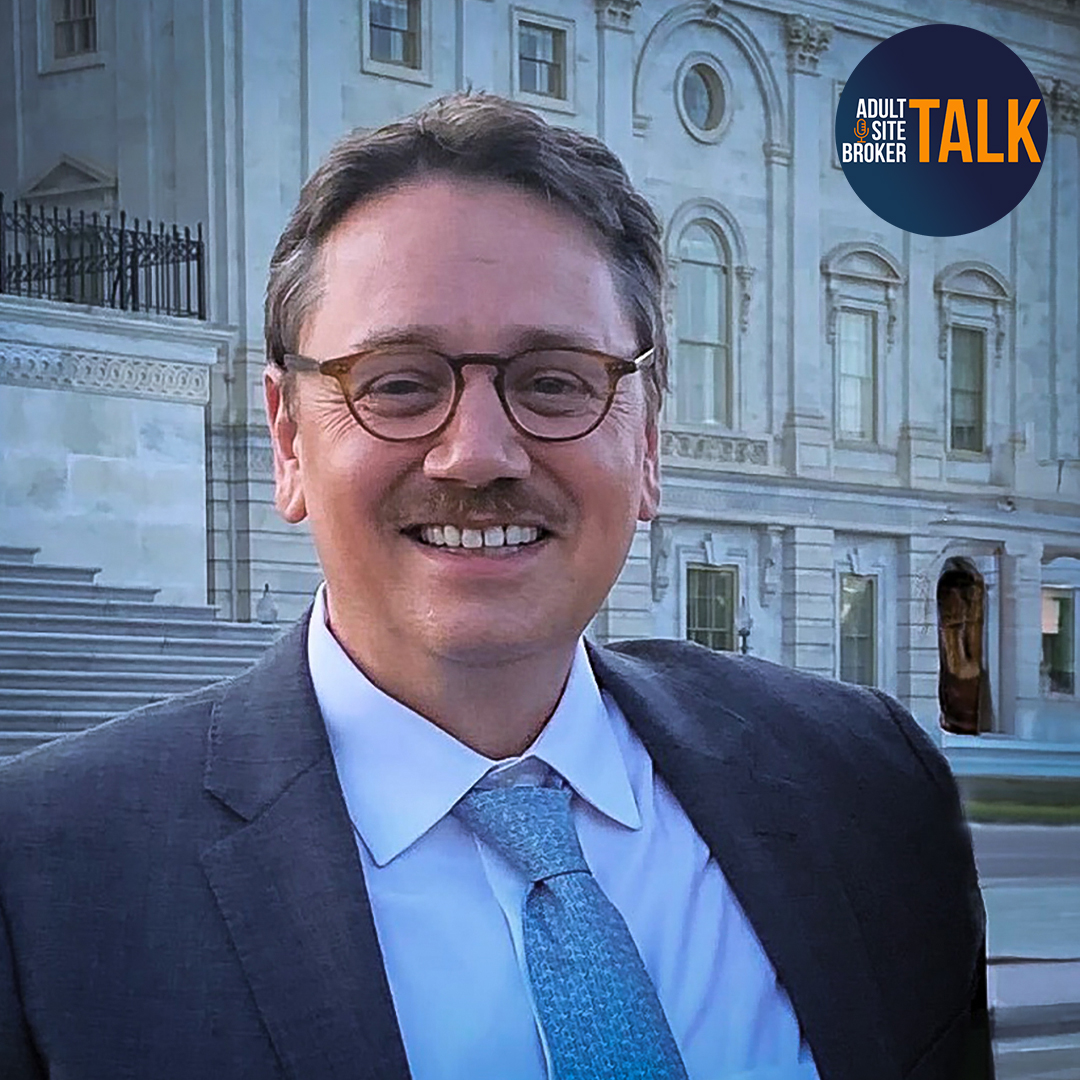
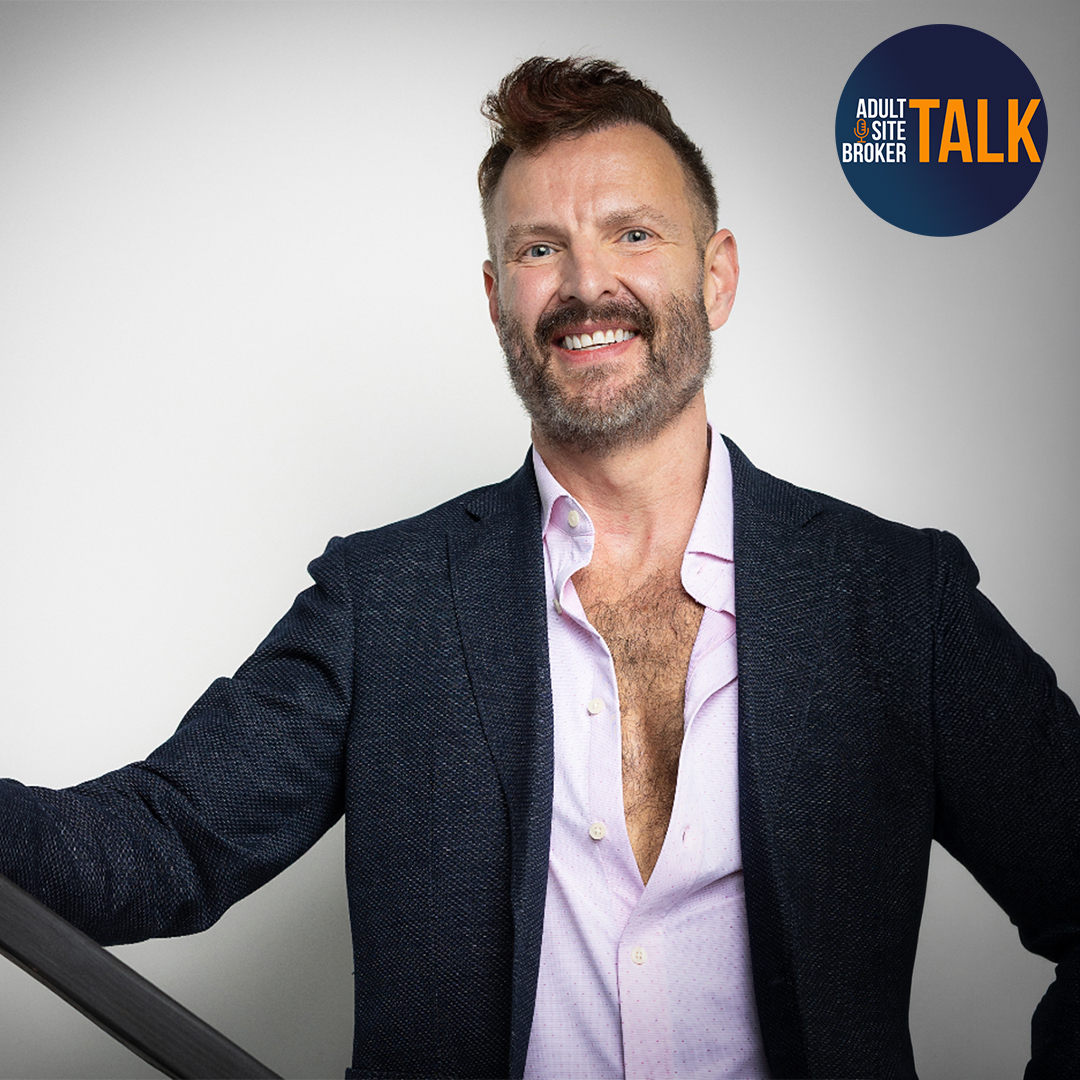
This is Bruce Friedman of Adult Site Broker and welcome to Adult Site Broker Talk, where each week we interview one of the movers and shakers of the adult industry and we give you a tip on buying and selling websites. This week we'll be speaking with Mike Stabile of the Free Speech Coalition in part two of our interview. We've got an events section on our website. You can find out all about the events in our industry and get discounts on some events. You'll find all that and more at adultsitebroker.com. We're proud to announce our latest project, thewaronporn.com. You'll find articles on age verification laws and other attacks on our industry. It's to raise awareness of our industry's plight in the war on porn. You'll find all that and more at thewaronporn.com. And we're always looking for buyers and sellers of adult sites and companies. Perhaps you've been thinking about either selling your site or buying one. Always feel free to contact us at adultsitebroker.com with any questions you may have. Now time for our properties for sale at Adult Site Broker. We're proud to offer a successful OnlyFans agency. The agency has 15 creators with 90% of them being on salary, so the agency is highly profitable. They handle all aspects of marketing for the creators, including chatting and promotion, with highly predictable acquisition channels. They do paid advertising for subscriber acquisition. In addition to agency operations, the business has developed a suite of custom-built internal tools that represent significant intellectual property and competitive infrastructure. They have a custom content production pipeline built for synthetic creator content using AI with Telegram chatbot integration for pre-funnel fan engagement. It also offers WhatsApp automation. They use a proprietary analytics, KPI, and sales verification dashboard with link tracking, ad performance data, sales verification, and payout automation. All tools are built entirely in-house and don't depend on third-party SaaS platforms. This technology is a great asset for the buyer to own. We have a rapidly growing SaaS-powered OnlyFans chat agency with strong SEO. The company has over 30 clients with very little churn, ranging from around $10,000 to over $150,000 a month. The company continues to grow and innovate. New technical features include an enhanced chatter portal, a new creator billing dashboard with daily billing, and an automated blog system to grow SEO. The company's set up with very little upkeep needed by the owner. It's a cash cow that's still growing fast. We have the largest foot fetish creator site in the German-speaking market. The site is a leading niche platform that's been the number one brand in the market for over three years. The site is highly profitable with consistent revenue and established SEO footprint and strong brand authority in its niche. We have a buyer who's looking for OnlyFans agencies, chatting companies, and OnlyFans traffic sites. He owns one of the top OnlyFans agencies in the world. We're offering a growing free porn gaming site with adult sex games. The site is owned by one of the top entrepreneurs in our industry. We have a premium AI companion platform focused on emotional realism and deep memory. Users interact with lifelike companions that remember every detail, respond with real emotion. They've just added advanced video capabilities. There are more properties for sale on our website. For more information on any of these listings, go to our listings page or contact us at adultsitebroker.com. Now time for this week's interview. My guest today on Adult Site Broker Talk is Mike Stabile of the Free Speech Coalition, Polari Media, and SWR Data, and who the hell knows what else. Hey, Mike, thanks for being back with us on Adult Site Broker Talk. Bruce, always a pleasure. I am always happy to talk with you. It's always great talking to you. Mike is a journalist and documentary filmmaker with over a decade of experience advocating for sex workers and sexual freedom. He's also the founder of Polari Media, a media strategies firm serving the adult industry, as well as SWR Data, a market research firm focused on the creator economy. Mike also serves as the policy director of the Free Speech Coalition and has been on the front line of the fight to protect First Amendment rights of those who work in the adult industry. And I want to say thank you for that. Over the past several years, Mike has become intimately involved with legislators at the state and federal level, working to stop government censorship and promote policies that support the industry. The Free Speech Coalition, the trade and advocacy organization for the industry, has led the fight against poorly designed age verification bills and is currently working to advance legislation, that's not a hard word, that would keep minors from accessing adult content online. That was easy. That was going to be my next question. I mean, what's going to be most beneficial for the industry? Certainly, these many state laws aren't helping us. No, they're not helping us. And again, they're poorly written. I think that what people really don't like about them is that they're ineffective. Meaning if I am an adult site and I have this type of content and suddenly people aren't coming to my site because I've got age verification, but they're going to the pirate site that is located out of the India or the Czech Republic or Netherlands or whatever else, because that's the next one down on Google, I'm losing money. People are going to pirated content and we're not protecting kids. So people are trying to figure out like, hey, is there a system we can make that like, if it's going to apply to us, has it applied to these other people as well? You know, because it does no good. You know, if someone was, hey, I have to age verify to get on a pirate site, but I also have to age verify to get on a legal site. Well, you know, I'll probably go on the legal site, right? If they know, right? If you have the worst people not age verifying and you have the best people age verifying, well, that's an even greater difference. So yeah, in an ideal world, what we would get is probably a bill that was maybe a device level bill, right? Where the verification happens on the device That's starting to happen. I think in the UK, Apple agreed to verify on device and to send that signal to websites. Boom, Pornhub is available to people with an iPhone again. Right. That may be, you know, a business move for Apple. Well, but then Android's going to have to do it to keep up. And that's what we would like. We would love, you know, we don't want miners on our sites, as you know, right? Like they cost us money. They don't buy anything. Aside from the moral and ethical issues, they're a money loser, right? They burn up servers and support and like moderate, like all this stuff is terrible. So we would love a magic solution that just wipes off all miners. And if we could get solutions to build it, that would be great, right? If we could get a signal that said this is a miner, block them. thrilled. Absolutely. Don't want them. So I think that that's where it seems to be moving. You see that with the federal laws? You know, I see that at the federal level, there is interest, you know, and finding a more effective solution. And I think that what that looks like, you know, the problem with the federal situation is that, you know, and we'll see what the situation looks like in come November. But, there are just so many different players. And we've seen that at the state level, too, you have a bill that makes sense that you're happy with. And the last minute, somebody comes in and part of an omnibus or part of a last-minute deal adds in something that's terrible. And so, you're not just watching the sausage get made. You're wondering if there's going to be poison in the sausage. As much as there's advantage in us pushing something forward and saying, hey, listen, can we get something that is countrywide, that actually is effective, that isn't just a disguised censorship bill, you think, yes, and then what if they try to put something in at the last minute that's terrible? You really don't know. So it is a risk, but I think that it's also something that we have to be engaged with. Yeah, 100%. Gosh, if they'd let you guys sit at the table when putting those bills together, it could, and if it overrides all the state laws, That would at least take care of the U.S. for now. Exactly. I'm working on my language lessons, right? Get the Duolingo out so I could go over. But no, it is the work that we're doing. Like I probably said, we're staying at like Hilton Garden Inn's, right? We're taking UberX. And we are making decisions based on what the budget is, meaning that there are some states that we can't engage in because there's too few of us. We don't have the money. And let me say it, everyone listening, the way they can do it is for all of you to become FSC members if you're not already. And for God's sakes, if you have a business, it is in your best interest to sponsor FSC just like Adult Site Broker does. Absolutely. I mean, this is not fucking UNICEF. This is not March of Dimes. This is not like, oh, we're doing something because, you know, it's not Feed the Children. You should be supporting those organizations. You should be supporting us as well. We're not a charity in that way, right? This is not just a do good, feel good. This is for your business. This is an investment in your defense. By the way, since the age verification push and the other laws that are hurting the industry, and I'll remind everyone you can read about all that every day at thewaronporn.com, which I own. I haven't monetized that either. I've got a lot of labors of love. but have you seen positive impacts on membership and sponsorship since all this has happened? I've been with FSC since probably 2013, right? And I've been involved in this industry since the early 2000s. So I've been engaged with FSC for a long time. And I will say that benefit of these, the side benefit is that people understand what we do, right? I think there was a long time, but what does FSC actually do, right? Well, if FSC had been funded when these laws were happening, When, you know, with Louisiana, which is the first state that pushed this forward, when Louisiana was getting, we had very little infrastructure to deal with these things. We had, you know, we had a weekly meeting with allies where we sort of talked about these things, but we didn't have a budget. I wasn't able to go to Louisiana and testify, right? Because we just didn't have that infrastructure. You know, we'd have the budget to hire a lobbyist in Louisiana to understand what the cases were to go and meet with people. And so the thing just ran largely at a post. You know, we made a couple of calls and things, but we didn't have all that. Now people understand, I think members understand what we do. Whether they give or not is a different issue. And in that way, it's been good. I think that the downside, and so we have members who believe in us, and I think that there are, you know, members who contribute a lot, and there's members who contribute what they can, and that's great. I think the downside is that age verification has really hurt the industry, right? If your revenues are down 30%, it's really hard for you to say, hey, listen, I've got to cut my donation or, you know, I don't know that I can do this. So that is a flip side. And of course, that's a downward spiral, right? But that's the last thing you should cut because it's only going to get worse as we've seen. That's why I'm still a sponsor, you know. You're not even an old content producer, right? You know, like you have directly, I mean, it has a side impact on your business because you want the industry healthy, but it is, again, a labor of fluff free, right? This is something that you as I shouldn't try to talk you out of a donation. No, it is important to you believe in it you believe it but other people again it is this is it and so people ask me well why are you guys not involved in france or why aren't you doing this well because we can't afford it right if we had more members if we had more engaged we could get people and we could do it and when we do it you know as you can see in washington or arizona or colorado or new hampshire or wherever else we can have an effect california we can have effect we can have those meetings and it doesn't mean that we're going to win in every place. West Virginia, we reached out to them and they were like, burn in hell. Oklahoma didn't care for us all that much either. But there are places we can make a difference. And that making difference means having staff means having the time to go out and do it. And so every time that people contribute, that increases our power and it increases the protection that they have. That's right. That's right. And again, I can't stress enough that people need to support this organization. This isn't your grandfather's FSC. This FSC is doing shit. And the only way it's going to do more shit is if we as an industry fully support it. And I also want to get to the large companies and appeal to them to, even if you're contributing, contribute more because the FSC needs it and you need it. The industry needs it. So I can't say enough about that. I appreciate it. I mean, I'm part time. There are so many things that I know you have a bunch of jobs. I've got to pay the bills. And I think that there's not another industry. I mean, you know, in the country that operates like this, right? We are a major industry. Do you think the waterbed industry, I don't even know if there's a waterbed industry anymore, but you know, they Jeffrey Douglas used to always joke. He had met somebody in the waterbed industry at some point. And they were like, that's what you guys are up against. Like we don't like you have to beg people for money? No, they understand. And so if you're talking about whether it is dairy or solar energy or whatever, there are people who have staff who are dealing with this, who are monitoring things, who are fighting things, who are educating, who are present. It's much harder to come in. You don't know anybody. You don't have anybody there to guide you around to do it. So the more that people contribute, the more we can do. Beautiful. So we've seen some moves at the federal level that could positively impact adult businesses. Go figure that. And again, thank you to you guys for your part, including an executive order on banking. You must have had a powwow with Trump. Oh, I said his name. I didn't mean to say that. Do you have any sense of how all that came about? I do. And at some point, probably many years down the ride, we would all be able to talk about all of the different things that happened. Did you have dinner with him like Bill Maher? I did not. I did not. But if I had, I would have mirrored Bill Maher and asked immediately for a drink. Yes. Exactly. That's so funny. That's so funny. He was so nervous he immediately asked for a drink. Surprised he didn't ask for a joint with Bill Maher. Yeah, he said, well, he already had that, I'm sure. Yeah, I'm sure. It was baked. So, you know, I mean, what I will say this is that the work that we have been doing since, I think, 2003, maybe even 2000. No, it must have been 2002 because I've got a little official business visitor ID on my desk that says December 2022 was when we first went out to D.C. and we started meeting with legislators. We have been talking with legislators about banking discrimination for four years. Right. We have been raising this. We have been educating them. We've been meeting with the banking committee. We've been meeting with Republicans. We've been Democrats. We've been meeting anybody to talk about this. We have met with the Treasury Department. We have met on background with banks, you know, to understand what's happening, how it's happening, why it's happening. Everybody agrees that debanking, the adult industry, is a bad idea. You know, I think that everybody we have met with almost universally has opposed it. And so I think that, you know, I've heard people in this industry say, you know, when the executive order came about, right, when Trump, ah, see, Trump is not so bad after all. He's doing this for us. I didn't say that. No, I've heard other people. I just kind of went, hmm, good. That's interesting. How did that happen? Well, you know, we have been meeting with the Trump White House, the Biden White House. We've met with so many different people in Washington that were at least on this sort of a figure and an expert. And we have talked with legislators who are opposed to our industry, but understand the threat of debanking on, say, faith based businesses, or they understand the guns and the extraction issues, oil and gas. They don't like the BDS movement. There's all this different stuff that people may not agree on politically, but they understand, oh, OK, well, this maybe isn't a good thing for banks to be in charge of censorship. And so I think that sometimes, and I don't think this is for FSC members, but I think that sometimes people outside the FSC, they see something and they say, well, isn't that just great that that happened? No, it didn't just happen. This is work that we have been doing quietly, steadily, aggressively for years. And so something pops up and you think, well, you know, it just sprung from this man's brain and he wrote it out and signed it. No, this is stuff that directly and indirectly we have been involved in. And I think that doesn't mean that it's not subject to political wins and there's not ways in which things get screwed, but we're working on the background. And I think that the hardest thing for us as an organization, the biggest challenge that we have is that so much of what we do is quiet. So much of what we do, we meet with offices sometimes, and they will say, don't send out a press release. Don't let people know that we've met. And these trips are expensive. And again, we are not staying in fine hotels. We are staying... The Hilton Garden Inn isn't as cheap as it used to be. That was the one by the airport. I think most of them are... That might actually qualify as a luxury hotel for most of them. We're staying in the hotel that is a yotel. It's like a one-room economy. These are things with like a – you don't have a restaurant. You have a vending machine. We're walking by foot where we can and grabbing a sandwich at the cafeteria. But this is stuff that has to be done. It doesn't happen overnight. It doesn't happen just because somebody goes in and does it. So when you see these things, when you see someone like AOC yell about banking discrimination or age verification or things like that, it's not just a matter of getting to one person and educating them. It's about creating a critical mass where Washington as a whole understands this. Because it's not – you get somebody – if you could lobby somebody and really educate them and they're really – but they're not going to go out on a limb. They're not going to go out on a limb for the most part for you and be associated with your industry or something complicated and controversial like sex work and say, oh, I'm going to just go out and do it. Occasionally you'll get it. They'll make some sort of political stance. But that's not going to move legislation. Legislation moves when you get consensus. And we have been to, I don't know, 50 different offices. We have been a constant presence. It is that sort of stuff. So the stuff that looks like it just grew out of the side of somebody's head, you know, and it is not a magical thing that that just happened. No, it kind of seemed that way. You know, it's like, oh, Trump did an executive order on debanking. Wow. No, I mean, there is so much that happened. You know, it's not even by the time that gets to that, the people who were doing that may not even understand sort of how that has happened. Right. These are big teams and lots of different parts and people and people are pushing that. And then once that gets issued, right, then it has to go to regulators to draft up regulations. It's just an executive order. And so people have to interpret it. So where does that stand practically for those of us in the adult industry who have had nothing but trouble with banks, with credit card processing? Obviously, the high risk fees for credit card processing are huge compared to what everyone else pays to process credit cards. Where does all that stand for us practically? Well, you know, once that EO comes out and they start working on the regulation, that's when the hard work, I mean, the other hard work begins, which is getting the regulators to interpret the order, right? Trying to get things drafted that make sense. And I think that also educating banks, right? Because we're the ones that are paying real close attention to this. I will tell you, we are, you know, meaning like the adult industry. They don't realize that other people aren't. And so sometimes you have to point out, hey, listen, by the way, there's liability here. And yes, we do count as political speech or, you know, we do count as, you know, a disfavored group and this is this and we can point to that. And you want to make sure that you're not carved out. Because if you look at something like tax on tips, now tax on tips we were not involved in, right? Tax on tips we were not involved in, but it would have applied to us. And then people got involved on the right and said this shouldn't apply to pornography. And we did work on that and tried to force all this, but that was not a multi-year effort. And so somebody gets in and they write out and they say, it doesn't work for OnlyFans or any of these groups. And, you know, this is part of the problem is that you have these groups like OnlyFans that is not a member. That's ridiculous considering the money. These people should be sending you a million dollars a year. You know, and they do not consider themselves adult. Right. And so what happens? Right. These things get passed when, you know, if there was investment, if we had the infrastructure to continue this, to be that presence, to know people, to have people's phone numbers, to have connections, to be able to get on the horn and say, hey, listen, we need to do X, Y, or Z. And they know you and they trust you and they can make that happen. But, you know, when you just come in at the 11th hour, you know, it's a real Hail Mary if you can get that done. So we still don't know if we're going to potentially be carved out of the thing. You know, hopefully not. I think that we are in a good place. There has been some guidance that has come out that has, you know, sort of echoed that we are part of this. There are examples in there and things like that. And, you know, unfortunately, I've been so focused on the legislative stuff that I haven't been dealing with the federal stuff for the past couple of months. But we are not only still in the game, but I think we're sort of getting written in. So I think that that, again, knock on wood, but we are engaged in that and working on that. And we had the money I'd be living in D.C. until we get this done. Sure. I understand. Of course, then you've got all the other states. So you said something interesting that OnlyFans isn't a member, which considering the fact that they kind of look at the adult industry and say, no, we're not adult. And they tell their investors and they tell everyone else that. What about other large companies in the adult space? Are most of those at least contributing? You know, I think that most of the big brand names, right, the people that you would see at shows, right, those big platforms are members. You know, a lot of our members, you know, there's members who don't want to be known as members. You know, they give money and don't want a target on their back. There's some risk. But there are, I will tell you, there are a lot of people that you would be surprised are also not members or corporations that are, you know, I, again, I'm not in membership, so I don't want to name any names, you know, let alone, I mean, they, a lot of times there's long discussions over these things. There's also people who are members and maybe not at the level that you would imagine. And then there are other people who are really great and really do a lot of work for the community and really do invest in this and engage separately and do all these great things. It is a mixed bag. I'm sure if Alice, I should have Megan, our membership director, come in here and she'll tell you. But it is there's a lot to be done still. Oh, yeah. No, most definitely. And I kind of knew that, but I wanted to hear it from you for sure. I mean, especially as the industry consolidates, right? We used to have a lot of mid-level companies, right, that were sort of the mainstay of this. And as those companies get bought up, they may disappear off the rules because, well, we're already getting through the subject. It's a difficult time. We're in a better position than we've been in the past, but far from an ideal from a financial standpoint. Yeah, well, we hope every time we do this podcast, I appeal to people to give. And yeah, I do it all the time. I do it on other podcasts too. So there you go. No, FSC is something that everyone should be contributing to generously. What do you think the next year looks like for us politically? Kind of asking you to look into your crystal ball this time. I know you have one. You know, I do somewhere around here. I got it at a garage sale. Like I said, I think that we are lean and mean. I think that there's endless amounts of things that I would love to be able to do, and I wish we had more people to do it, and I wish that I had more time to do it. I think that where we work now is towards device-based solutions. I think that the momentum is there. I think that I've made a couple of challenges to myself, and then some are organizing calls and stuff like that. I've laid down a gauntlet about a couple places where I am going to push for unlikely partners to get age verification done on the device. If we can do it on the device and if we can comply with that, that is so much better for our industry that everybody in our industry is going to comply. Even the pirate sites can comply, right? Because they don't want miners either. Maybe they don't care, but... They may not care, but it's still going to cost them money, right? You still don't want, like, right? You're still just doing service. So we want to find a solution that works internet-wide, works globally. You know, it's much easier to patrol. You know, there are three device manufacturers for all intents and purposes, you know, in the world. Right there. There's, you know, at least in the US, UK, Western Europe. Right. And that is Android, Microsoft and Apple. So much easier to keep those three than it is to try to patrol a million sites that are popping up and popping down globally. Right. And well, we we whacked this small. Well, this one popped up. So I think that that is it. I think that's what we're looking at. think we're you know we're building relationships with other groups right we've been steadily making inroads with the tech industry to help them understand that like hey listen you know if they stab us you know it just works to sharpen their knife for you and you know at least on on these things and let's figure out ways where i may not like you you know i may have other issues with you but i think we can get this stuff done so i think that there's a lot of i'm hoping that the next year is one of progressive legislation that we can sort of move forward at the state level. I think that there are going to be, you know, unfortunately, more and more of these bills. Talk a little bit about what's pending right now, what you know about off the top of your head and what we're looking at on these, because some of them didn't look too great. No. So I think that luckily, for the most part, most states, you know, that first four months of year is miserable for us because there's a new bill getting introduced every week, every day. You know, we will deal with 50 bills in a session and most of these state legislators are in for a few months. And so there's a sort of desperate rush to get these things done, which means that bills can move very quickly. Now that we're in May, it's a little bit calmer, right? There's only a handful of states that still have legislators in session. You know, right now what we do is we really do the background work. And again, this is a, as resources allow. So I'm going to be working to try to, you know, we got the veto from the governor in Wisconsin, one of the hardest fought battles that we have had, you know, through the whole session on that, the governor said, I think that device-based solutions are more effective. You know, this isn't going to work. It was a bold move on his part, but he had that in there. So now there's interest in Madison, you know, on device-based solutions. That means that that work has to be done because once that legislature goes back into session, things are going to rocket, right? You don't have the time to do it. So you have to build alliances, figure out who's going to introduce it, how you're going to get that done. Similar with the other states. I think that what we need to watch out for are these bills that don't look too good, right? So North Carolina has a bill that is a tax. I think we're going to see more of these VPN bills that are coming. And so now is the time when we do those alliances. When that session goes in in January, I think we're going to see more of these bills like we saw in North Carolina, like we were able to stop in Arizona. You know, I mean, I will tell you the North Carolina bill got introduced, the one with the model releases and the bill that didn't violate a contract. We just had no resources to do it when that happened. You know, we did not have the capacity. We were at capacity with things that we do. Alice and I make these decisions, You know, along, obviously, you know, sometimes with the board or, you know, a legislative committee, and we look at things and we say, what do we have the resources for? What do we think is our best chance of making an effect on something? How quick is something going? And we make choices. A lot of times it's like Sophie's Choice. Well, I can't do this one. And this sucks. But we're going to do it. That all comes down to funding and personnel, right? It comes down to funding and personnel. And personnel is funding. So you look at something, you look at state and you say, OK, well, this state, I think we can have an effect in it. And it's closer to us. This state, we don't think we have an effect. And this is, you know, it's it's rocking forward and it's it's across the country. And so we make those choices and we do what we can. It doesn't mean that we give up entirely. But if it comes down to hiring a lobbyist and being able to go out there, we only have that amount of money for, you know, a certain number of these. There are some state lobbyists now? There are state lobbyists. Usually on a part-time basis, we worry an industry like tech or oil and gas or sparkling water. We would have somebody who was sitting in the state capitol and chumming up with everybody and doing anything. But right now, what we do is we sort of beg, borrow, and steal. We say, hey, listen, we'll come in, but we can only do it for a few months. And we'll do most of the work. And this is what the situation is. And we're good guys. And we try to charm them and do it. But that's that's it. You know, they're sort of part time lovers. And we try to be as gentle as we can and, you know, and move on. And hopefully that they, you know, they come back the next year if the bill gets reintroduced or whatever. So, yeah, that's what we're looking at. And I think that, like, we're going to see more tripwires, right? We're going to see more stuff that are meant to create liability and instability in our industry. And I think that it's more important than ever to be involved in this because those are ones where you can actually say, hey, listen. I know what you're trying to do here. You don't want to say this is a bad faith, but you could say, hey, listen, if we want to protect the rights of models, let's talk about ways in which we can do it. It's a little less heated in some ways than age verification, which everybody got sort of fueled about. But like I said, I went in in Arizona with a thing that was meant to be, it was a good faith, right? It said a good faith, we want to protect people from revenge porn and child pornography. And they said, listen, this isn't happening on our sites. This is happening on other sites. I will what we do. And I will tell you what you would need to do it. But it's essential that you don't hurt the good guys while allowing the bad guys to go through it. And that's the problem. They tend to lump everything together. The offshore sites that has all the crap on it, the pirate sites, which sometimes that's the same thing, revenge porn, wherever that ends up getting, that usually gets posted on social media. And all of a sudden, it all becomes porn. And we're the bad guy. that's it and that's it i mean i will see these things you know i am relentlessly monitoring the news as well for for a lot of you know special services and we go through and i look every morning and you'll see these things what we will say child porn webcam ring busted in manila and you'll go and you'll be like okay well what is this and you're like oh it is not a webcam i mean it is a webcam and there was a webcam technology it's not a cam site or they'll say cam network or something like that. Like, okay, these were people who were, you know, kids locked in a basement, they were getting paid in crypto, and they were broadcasting on FaceTime. Like, this is not something that is happening in the legitimate issue, but they write the headlines. And so that everybody goes in and they think, oh, this industry is full of like scumbags. And people will do everything but spit in our face sometimes at the legislative meetings. We have had hostile people who are just like, I think you guys are the devil. And if you are not there, and they don't get to know you, And they don't say, oh, actually, you're sort of a normal person and, you know, normal in quotes. But like, you know, you're a reasonable person, right? You're somebody who seems to know what they're talking about and seems to actually care about protecting people. You know, that's something we can do. Yeah, the industry definitely needs to be humanized. Yeah. And to be present, right? We need it. Like you said, we need to see the table. I almost think we need some kind of an overall campaign to humanize the adult industry. You know what I'm saying? Yeah, and we're working on it. We've got stuff coming up this, actually, just in time for whatever, but there's a larger campaign about getting people to understand who we are and what we do and why we do it. Because that is what's fueling so much of this. Yeah, Owen, I forgot to ask you when we were talking about financial discrimination. Give me an update on the credit union. So I know that that is continuing to progress. I had a conversation with Allison last week before XBiz to get an update. It continues to be a challenge, meaning that it is an uphill battle. And there are surprising twists and turns where this person likes us and this is moving forward. But I don't know enough about it, what the latest is, to give you a real update. So we don't really have an ETA yet? She may have an ETA. Well, Allison is overdue to come on the show. Not that she doesn't have other things going on. We've gotten some approvals and there's some things that still need to be worked on. And then you have to do fundraising so you have a certain amount. that they can guarantee it. It's constantly back and forth. Yeah, I understand. So outside of FSC, since you wear many hats, you have to. I know you've been really involved with tracking the creator economy through SWR data that you're the co-founder of. Can you talk a little bit about that and maybe give us some sense of where you see the industry moving as a whole. So you have the numbers. Yeah. I mean, you know, what Melrose Michaels and I, you know, my co-founder on SWR, we started working together a little bit during the pandemic. She had been doing some work with FanCentro and I was working with FanCentro doing some media strategies and things like that. And we liked each other. And she was, you know, it was maybe 2022. And we said, wait, what is this new community? Right. Who are these creators? What do they do? What do they want? Like, what are they demographically? You know, How much money are they making? Like, nobody knows. All you know is you see a headline about, I made a million dollars selling bathwater. And then you see, you know, anti-porn group being like, this is all exploitation. The average amount they make is $100 a month. You know, these are digital pimps. And so, you know, just out of curiosity, a sort of labor of love, we said, hey, listen, let's figure out a way to survey these people. Let's do some anonymous surveys. Let's figure it out. The first year, I think we had 200 something people that we, creators that we surveyed, got some just general images of that. And so we've gone on since then and sort of broadened and figured a lot of things out and brought in more creators and are doing it. So we have been tracking now the creator community for the last, since 2002, we do an annual survey state of the creator, which is sort of 2020, right? 2022. Yeah, I don't even know what I said. Yeah, 222. Yeah, so we've been tracking them and trying to understand how they're moving and what's going on. And, you know, and I think that what we realized is that we're not the only ones who are curious, right? Platforms are curious because we will talk to platforms at a show or, you know, Melrose is working with one or something. And they'll say, well, you know, I want to bring on more creators. How do I get more creators? It's just like, well, do you know what they want? Well, no. You know, well, I think I know what they want. I think they want this. You know, and that's often because they read a headline on XBiz or Bloomberg or AVN or whatever. Or somebody said something on social media, you know, or they see it was. I mean, the thing is, is that what we're able to do is we're able to look at creators in a way that is platform agnostic. So we look at creators across the whole spectrum, cams, fans, whatever, and everybody's working in different things. So what we've been doing is sort of mapping them and understanding how it changes over time, because we've been doing it for four years now. We're able to sort of see how it's trending and we can see things we've been publishing. We have a sub stack where we publish all of the data. We're trying to figure out ways in which to incorporate it. We've got a mailing list and that goes out. You know, people can sign up. It's free. You know, and what we see are there are a couple of things that we noticed this year that I'll bring. I won't bore you with all of the different things that I think is happening with the creator. You know, some of the headlines that we saw this year in terms of this year's survey was that, one, the age verification is hurting creators significantly. You mentioned this earlier and I was going to reference SWR, but go ahead. Yeah. You know, what we see is that this year, one of the questions we ask, we obviously ask demographics, we ask income, we ask, you know, what sectors are you in? What types of platforms are you on? Who do you like? Who do you not like? All that sort of stuff. AI, crypto, all these things. And what we found was that, quite surprisingly, in some ways, is that that race that for the past couple of years, everything has been about how do I get a high payout? Right. What's my high percentage payout? That was driving creators. This year, more creators said, I want strong internal traffic. And that's because of the war on porn, right? They are getting booted off social media. It's getting harder for them to make money. They're valuing things that are steady. And we found, for instance, that cam performers are faring better overall, right? There are differences in income levels for the different sectors, but cam performers in particular have a more stable income stream right now than say a fan-based creator because they're not vulnerable. They're not as vulnerable to getting kicked off of social media, right? They're not as vulnerable. We have creators who are saying, my fans can't access my content anymore. I'm getting notes from people in Louisiana saying, I'm not going to put in my ID to go on only fans. If you're working on a platform like a Clips platform, you know, or a camp platform where there's internal traffic, you're a little bit more buffeted from that type of stuff. So we're seeing creators sort of reimagine the creator economy, right? They're becoming more diverse. They're trying to figure out ways to not just grow their business with the greatest payouts, but how to do it. We're seeing them sour a bit on OnlyFans. You know, that's been happening since we've been doing the survey, but that has certainly changed. We're seeing fewer and fewer creators do that. I think that with the sale and the valuation, I think that that bears out. You know, OnlyFans' own rate of growth has been slowing. So I think that we're starting to see that people are brand does not matter as much anymore. Meaning that we thought when we asked this year, you know, one of our people we work with said, hey, I'd be interested to know if, you know, one of the, you know, we did a platform with sponsor studies and stuff so that we can give money back. They said, hey, you know, I'd be interested to know if, you know, how much it matters. Are people doing OnlyFans because consumers know OnlyFans, right? it was the least important thing of all the things that we looked at you know for what what creators do for a platform that's surprising it is i mean they think that that's it i think that so much of our industry is based on conventional wisdom and i think that so much of our industry when it comes to data we look at things that are traffic how what are sales you know or sales up or sales that we don't do a lot of look under the hood and if there is something that is you know that correlates between the work I do with FSC and the work that I'm doing with SWR is that there's so much stuff happening that you don't see. And you need to stop and pay attention. If you want to be successful in this industry, you need to know what creators really want. You need to get behind, beyond the sort of why I assume that they want this, or I've heard that this is what they're looking for. You have to understand how they're using these platforms, what they're doing, and why they're doing, because they're the lifeblood of the industry now, right? Creators are the lifeblood of the industry. And they always have been. But, you know, in terms of there was this idea that performers were disposable, that there would be somebody else coming down the line. I think that sometimes now it's never been true. Now, platforms are really fighting for creators. And I think that a lot of the stuff that we go through, you know, we produce reports that are, you know, public, we produce, you know, we work with platforms sometimes on private reports to help them understand the data to give us to go down. Sometimes we'll work with platforms who will sponsor us so that we can go deeper into something. And again, we've raised almost $10,000 this year for sex worker groups through sponsorships and things like that. We want to expand that. So I think that creators are going to continue to drive this economy. We need to find ways to help platforms understand what they need. Yeah, absolutely. Well, it's a great effort and kudos to you and Melrose because I know for you, that is a labor of love. Everything you do is a labor of love. Let's face it. Last question. I'm going to add one more thing here that we didn't put on the agenda. Polari Media. We don't talk about that, Mike. Your PR agency. Come on, tell me what's going on there and all that. You know, I mean, I have been doing, you know, sort of media strategies more broadly in, you know, for years. I got started as a journalist, so I know the industry. You know, a lot of it is the stuff that I use in FSA, right? In addition to the stuff that I do in terms of lobbying, it's about changing messaging. And so, you know, when I work with platforms, you know, when I work with companies, you know, what I try to do is to figure out what's interesting, you know, like what's going to be interesting to me. I've got a little bit of an ear in terms of like what I, you know, I spend so much time in media and reading all the, figuring out what people are going to do. So, you know, I think that a lot of my energy has been put towards SWR, which means that I haven't been doing as much PR work for clients, but I do have a few that I love and continue to work with. But it's about I see all of these things working together because what I want to do is to put forward a positive version of this industry. I want to highlight, and I don't mean that in a way where I want to paper over things or things like that. I obviously engage with things, but I want people to understand the story of our industry. So when I work with platform, I want to find the things that are, you know, I mean, when I worked with kink.com for so many years and they we really mesh because they had a goal of, you know, destigmatizing sexuality, human sexuality. I think that that's where I am. So I try to work with platforms who are interested in that I'm selective in what I will do. I've certainly turned people down and I've fired clients because I don't believe either politically or I don't think that we're a match. But, you know, I do a lot of crisis management. I get called into things that, you know, what has happened. And, you know, it's always about sort of when things get so heated, you know, whether it's at a legislative level or whether it's a lawsuit or whether it's, you know, a press crisis where something's coming in, it's hard to get people to listen. And I think that if I have one skill that I will take credit for, I do think that, you know, I don't like to fight. I like to figure out how do we make this work and how can I talk people down off the ledge and how can I talk to a journalist and make them understand what this is or how can I highlight what is really great about this country, this company. This country is a different issue. This is true. How does this contribute? Because I think that what we do is so great. I think that it's so funny. I think that we have so much more fun. I think that it is like, you know, people always say, well, you think that porn is really good? I say, well, I think it's a hell of a lot better than sexual repression. I will tell you, sexual repression has a much worse history. And I would much rather be out and talking about these things and burying them and telling people that sex is bad and all this. We can deal with issues of consent. We can deal with, you know, all of these different things. But ultimately, like, this is a societal good what we do. Right. We have people able to talk about sexually. People have to express themselves with people. You go to the I mean, you go to a show. Right. And you see especially a fan based show. Right. For a lot of people, this is the only sexual out that they have. And for many people, it's just it's their only way of accessing a specific way. If I'm in a committed relationship, but my partner is not into kink or sex drives are different. Right. That is something. it. So it's like, that's all the stuff that I love working. I love working on data, you know, whether it's SWR with a client, I love digging in and trying to figure out how do we tell these stories. And if that helps, granted, I'm thrilled to have, you know, a client I love and work with because, for Polari, because, you know, it helps me pay the bills in a way that allows me to do the work that I want to do on FSC, you know, a little bit more freely. The passion projects, yes. Yeah, like, exactly. Let's do it. So I appreciate you asking. I'm always happy to talk to people I give away far too much free advice. You and I both. Yeah, I know, Bruce. That's because we care, man. We really do. I mean, I love it. I'm from a circus family and this is, it was a match from the beginning. There you go. Well, Mike, I'd like to thank you for being back with us on Adult Site Broker Talk. And I hope we'll get a chance to do this again soon. Oh, thanks for having me, Bruce. My broker tip today is part three of how to buy a site. Last week we talked about finding the right site to buy. Once you find it, what do you do? Once you've either reached the broker of the site or the seller, review the information about it. The broker should provide you with the following. A profit and loss statement of at least three years that's up to date. If it's June and they give you financials only through the end of the previous year, you need to see what the site is doing now, not last year. If it's a pay site, get a username and password for the site so that you can review the content. Ask how often the site is updated. Get some history on the site. How long has it been in business? The story behind the site and why the seller wants to sell. Get an inventory of the content and how much of it has current technologies. Find out if all the content is exclusive to that site. Ask the seller if the content has ever been on VOD or DVD. See if there are any clip stores the content is on. Find out how much the content costs to produce and what the current cost to production is. Very importantly, see if this operation can run without the owner. Do they do the shooting themselves or do they hire someone to do it? And if there's an outside producer, will that person continue to provide content for the site? Find out how many new joins and rebills there are a day. Ask them what's the retention rate on the site. And find out if they do advertising on the site and where they get their traffic. Ask for Google Analytics access so you can see where the traffic comes from. This information will give you the opportunity to truly evaluate what it is you're buying. Then if everything looks good to you and you want the site, it's time to make an offer. Only you can decide what the site is worth to you. If you're working with a broker, say, oh, I don't know, adult site broker, of course your broker can help you determine the value of the site. We'll talk about this subject more next week. And next week we'll be speaking with Thomas Erksson of Sasha. And that's it for this week's Adult Site Broker Talk. I'd once again like to thank my guest, Mike Stabile of the Free Speech Coalition. Talk to you again next week on Adult Site Broker Talk. I'm Bruce Friedman.

 Featured
 Featured