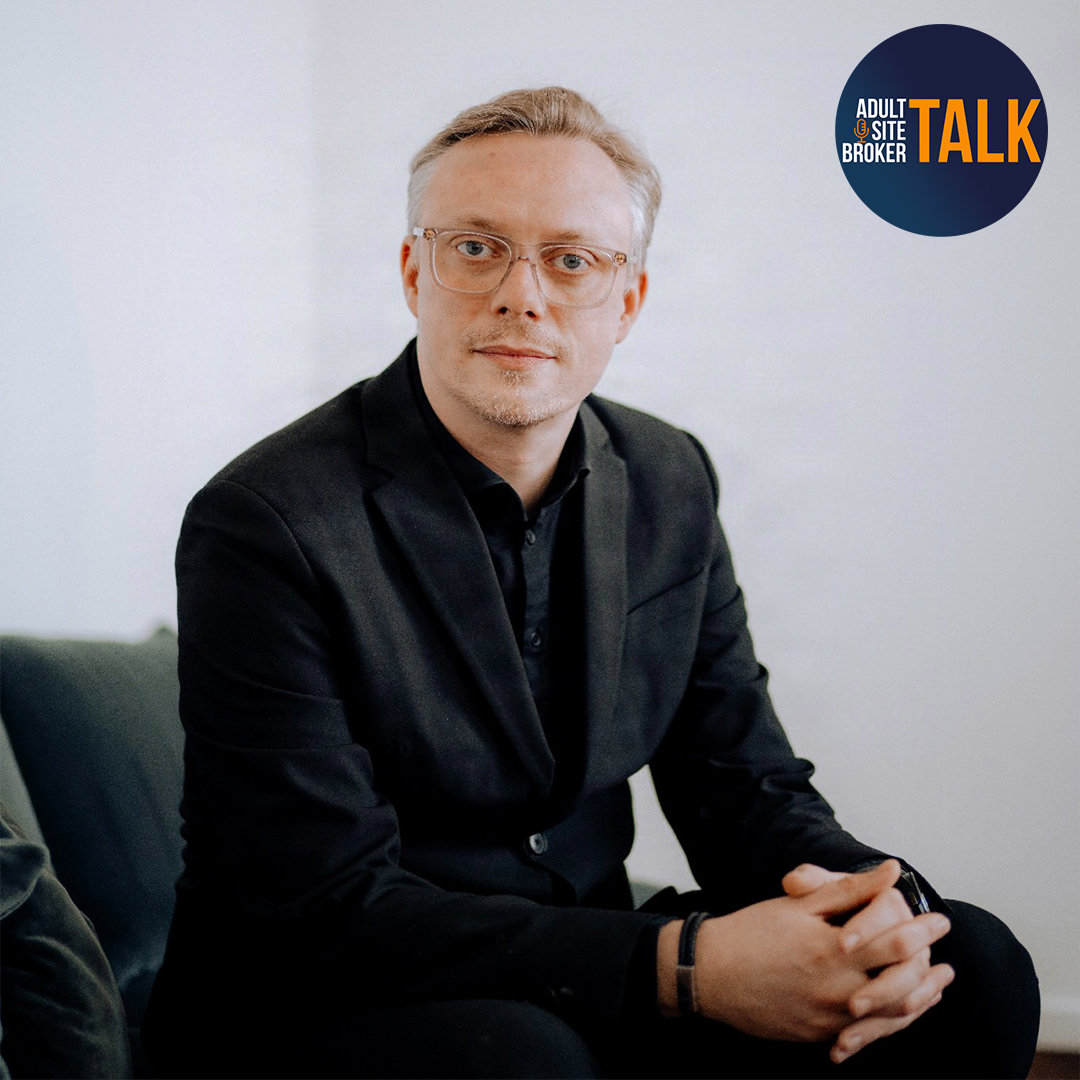
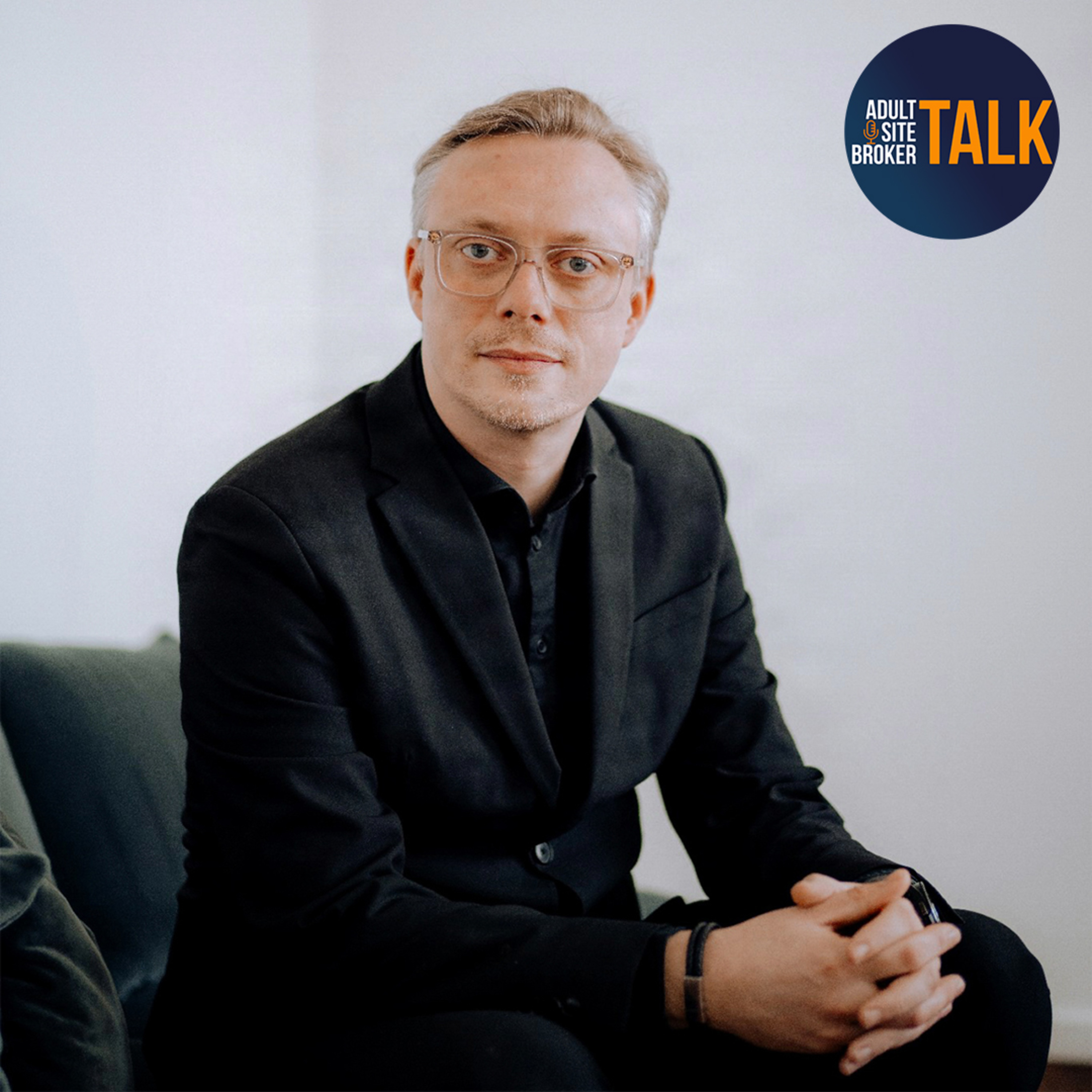
This is Bruce Friedman of Adult Site Broker and welcome to Adult Site Broker Talk where each week we interview one of the movers and shakers of the adult industry and we give you a tip on buying and selling websites. This week we'll be speaking with Thomas Eriksson of Sasha. We've got an events section on our website. You can find out about all the events in our industry and get discounts on some events. We have discounts for the AW Summit in Bucharest, September 21st through the 23rd, and the TES Affiliate Conference in Prague, September 25th through the 28th. I'll be attending both shows. Hope to see you there. You'll find all that and more on our website at adultsitebroker.com. We're proud to announce our latest project, thewaronporn.com. You'll find articles on age verification laws and other attacks on our industry. It's to raise awareness of our industry's plight in the war on porn. Go to thewaronporn.com for more. And we're always looking for buyers and sellers of adult sites and companies. Perhaps you've been thinking about either selling your site or buying one. Always feel free to contact us at adultsitebroker.com with any questions you may have. Now time for our properties for sale at Adult Site Broker. We're proud to offer one of the most established AI-generated adult cartoon pages on Patreon, with over 530 paying members. There's a website as well. They have over 300 characters, 80,000 images, and 30 hours of video content already produced. The Patreon page has organic, loyal members with an 80% monthly retention rate. 90% of the traffic is from the U.S., U.K., Canada, and Australia. We have a successful OnlyFans agency. The agency has 15 creators with 90% of them on salary, so the agency is highly profitable. They handle all aspects of marketing for the creators, including chatting and promotion. The business has developed a suite of custom-built internal tools that represent significant intellectual property and competitive infrastructure. They use a proprietary analytics KPI and sales verification dashboard with link tracking, ad performance data, sales verification, and payout automation. All tools are built entirely in-house. This technology is a great asset for the buyer to own. We have a rapidly growing SaaS-powered OnlyFans chat agency with strong SEO. The company has over 30 clients with very little churn, ranging from $10,000 to over $80,000 a month. The company continues to grow and innovate. New technical features include an enhanced chatter portal, a new creator billing dashboard with daily billing, and an automatic blog system to grow SEO. The company's set up with very little upkeep needed by the owners. It's a cash cow that's still growing fast. We have the largest foot fetish creator site in the German-speaking market. The site is a leading niche platform that's been the number one brand in the market for over three years. The site is a highly profitable business with consistent revenue, an established SEO footprint, and strong brand authority in its niche. We're offering a growing free porn gaming site with adult sex games. The site is owned by one of the top entrepreneurs in our industry. We have a premium AI companion platform focused on emotional realism and deep memory. Users interact with lifelike companions that remember every detail and respond with real emotion. They've just added advanced video capabilities. There were more properties for sale on our website. For more information on any of these listings, go to our listings page or contact us at adultsitebroker.com. Now time for this week's interview. My guest today on Adult Site Broker Talk is Thomas Eriksson of Sasha. Thomas, thanks for being with us on Adult Site Broker Talk. Thanks, Bruce. It's great to have you. Thomas is the founder and CEO of Sasha. Driven by the mission to end online image abuse, Thomas developed Sasha's patented in-pixel signature technology. As a serial entrepreneur with a background in edtech and medtech, Thomas has scaled Sasha from a vision to a robust product presented at the EU presidency meeting for digital affairs and awarded the 2025 World Summit Award. So congratulations for that. Thanks, Bruce. Sasha, short for Safe Share, is a Danish technology company building the infrastructure for safer image sharing. Founded on the belief that sharing an image is an act of trust, Sasha has developed what it describes as the world's most resilient, scalable image protection technology, a hidden digital signature embedded directly into images that stays with them permanently, regardless of how they're altered. For trust and safety teams, protection doesn't stop at the point of upload. It travels with the image wherever it goes. Sasha works with online platforms, creators, social media companies, and businesses that need to protect image content at scale. You can find them online at Sasha.eu. So, Thomas, you founded Sasha after witnessing a close relative experience, non-consensual photo sharing. That's terrible stuff. Can you walk our listeners through that experience and how it transformed into this mission to fight image abuse? Yeah, definitely. And nice of you to have me here, Bruce. So around five years ago, a relative close to me called me up and told me that her ex-boyfriend had leaked some of the images when they were together she had made for him. And that pissed me off. And the short story is that we went on a takedown spree together. And you could say, because of the delicate situation, it was actually really hard to help because I didn't want to see the images. And of course, so it was this remote help. And you could say the bottom line was it took too long to get down. And when we got it down, I think it was about 20 minutes after, it was up again just altered slightly oh geez we were on it again and you could say that that whole episode made me was my call to to say okay this problem needs to be solved and it's also because when someone you you hold dear is a victim of this you of course go online to try and find help and i just couldn't find anything i could find how big the problem was that one out of five victims of it. And that's not taking into account all the copyright infringements and professional infringements. So you could say something needed to be done. And I'm so proud that we here at Sashanile have built it and what we believe have built the best way to solve it. That's fantastic. So you mentioned those statistics. One in five people have experienced image abuse, which is staggering, yet 31% of victims never report it. Why do you think there's such a massive reporting gap and what role does shame play in it? Yeah, so I think it's a lot about culture, to be honest. So you could say the problem is at its highest in the age between 16 and 34, according to our research. And you could say in that age, you are experimental. You communicate, you love, you drink, you have fun, you create new relationships. You could say you are experiencing what this world is all about. In that, you could say you, of course, come to this, that you could say part of your life with some baggage from your parents saying what you should probably do and what you should probably not do. And you could say the whole internet age has, for the newer generations, always been a part of their life. So for them, it's as normal to be intimate online as it is in the real world. it's an extension of themselves even more so man yeah it's definitely and you can say what i what i believe with this lack of of reporting is it's rooted in shame it's rooted in you are young you you believed you that that that person or that group was someone you could trust and now you see that trust broken and you feel stupid and you feel embarrassed and you can say that when you have a problem it's really hard for people to help you if you don't tell them what the problem is and if the problem is embarrassing or character breaking you could say a scene from outside is that if that's your you could say opinion of the situation you're in then you are most likely not to to tell anyone which is a shame yeah well it is a shame and it's kind of like rape reporting isn't anywhere near where it should be but um yeah i mean the whole online image abuse thing and you know revenge porn which is illegal almost everywhere in the world now it's rampant and just because it's illegal doesn't mean people don't do it and it's just it's just horrific and for your relative uh you know she experienced it and that's really sad that she had to go through that. So you realized there was no effective technology on the market to prevent image abuse when you started. So what specifically was missing and how did that gap inspire Sasha's technology? Yeah, great question and one I used almost two years on trying to answer. I find the answer to happily, I believe we did. But you could say the short answer to that was people don't behave badly if they know there is a consequence. And that consequence can be divided into two, you could say, types. Legal consequence and personal social consequence. So you could say you're in a room with a lot of people. You are not likely just to go and smash someone because there will be a social consequence in that group. And there will probably also be a legal consequence if you hit hard enough, right? And you don't want that. You don't want your negative behavior to be, you could say, publicly available and punished. And so you could say, what we found and what I believe is the differentiator and the paradigm shift we are creating is we bring back, you could say, consequence for bad behavior online by being able to document what the original intent was with the shared content, and thereby removing, I think, the biggest excuse online, no matter if people are sincere about it or lying about it. I believe that the sentence, it was not my intention, is maybe that sentence that most people can hide behind online, right? I didn't know. I didn't get it from there. And the problem here is the ability to prove that what you're saying is not correct. So at Sasha, we decided to say, hey, if we protect and create a framework to protect that original intention in that image and make sure you cannot remove it from the image, then we are not discussing about it was not my intention because the intention was able to be read at the moment you received it. But most importantly, you can say it's just documenting what we all know, because we do all know that, of course, you're not allowed to use other people's images without consent. It's also, you can say, I cannot, if you lend me your car and I lend it to another friend and he smashes the car, you don't care about my other friend. You care about, I now need to buy you a new car, right? So it's the original intent, and I cannot hide behind saying, hey, I just borrowed it to a friend. It was not my intention. You would pretty much just say, hey, I don't actually care what you did, but you had the responsibility, and you now need to solve it. And I think that's what we are creating. That is what we are creating. And you could say that the cool thing here is we can then embed it. So if you find it somewhere, you can see where that copy of the image you could have shared the same image to 100 or 1,000 people. You are then able to see that copy of the image was the one I sent to Bruce over whatever platform at this time in a private, you could say, intent. But it could also be in a commercial intent with this license. Yeah, piracy is obviously a huge issue, and I'm sure that's the hot button that is going to get everybody's attention in our industry. Yeah, definitely. And I think what's really amazing here is I've been talking to so many people, Bruce, and I've also been talking to pirates. And the fun thing is the distance between their action and their own person. Because if you actually sit down with a person like that and say, hey, did you know that the director lended money in the bank to get that production done? He didn't have the money. He wasn't rich. He put his whole savings together with actors and the crew to say, hey, let's make something great and get a good return on that. And that's actually what you're ruining. Oh, no. And they don't think about that stuff. No, no. Exactly. But the fun thing is their reaction when you actually talk in that manner around their behavior. Then they're like, hey, if I knew that, I definitely wouldn't have done it. Right. So what it says is if you can clarify the intent, it's hard to argue, right? Exactly. Exactly. So why don't you explain in simple terms how Sasha's hidden signature technology works and how it stays with an image even after it's been exported, altered or shared multiple times? Yeah, so what we do is we cryptographically embed a signature into the foundational pixels. You could call it a watermark. We do that in such a way that you cannot remove it. And what that means is that even though you screenshot it, you put a filter on it, you memify it, you rotate it, you crop it, that ID still stays in the image. And then what we have done is build a framework around that, that empowers a record where you then put in your intent. So the signature links to record with intent. That record is split up to three different layers. The first one is what we call the global layer, which is the part of the record that everyone can look up for free. It could have this is private or this is commercial, the license, everything that's not PII and that original sharer wants to make sure people understand, we put there. Then you could say, if you use it through some of our partners, you could have a partner relationship where, as a partner platform, sorry, where the partner then can put additional info, which is not readable by the rest of the global network, but can add to your documentation. And then we have the lowest level, which is on your own device, where it could be, I shared it to Bruce, where all the PII is that we at Sasha or platform definitely don't want, but it's really crucial for you to point out, let's say, if it's a good friend. And what is PII? So PII is personal identifiable information. So you could say it's making sure that the global record can never compromise privacy from the one who shared it and the one who received it in public. That information is only available to the sharer on their own device. Okay. So the adult entertainment industry faces, obviously, some big challenges, both with unauthorized content sharing, i.e. piracy, and also with AI now with deepfakes. In fact, I had someone want to sell their deepfake site through me, and I basically told them to buzz off. They wanted to share something where people put up photos and then they undress them. And I'm like uh no but it makes a lot of money good luck when you get sued and arrested so how is Sasha positioned to help creators and platforms in the space protect their content yeah so we have different ways to do it again we we build Sasha as an infrastructure technology to especially allow our customers to use it in their workflows and not a forced workflow we have predefined and i just think that's important to say. But the way we can protect an individual is that if their content they create, they can mark that content and they can make sure that every time that that content is being shared, they know who it was shared to and under which conditions. So if it ends up on a third party site or somewhere where it shouldn't, you could say a big problem is one, proving that This was ill-intended. It was not what the content was supposed to do. The record we have proves that. The other thing is that a lot of creators use platforms to, of course, communicate their content. And what we can do there is also empower them to know which one of their maybe premium subscribers actually took this and put it on a public site. That's perfect for a lawsuit. Yeah, but it's also perfect to make sure that the passionate fan culture can be preserved, where you don't have to scream at your fans and say, some of you do this to me, stop it. We can convert that to, you know, just, hey, John Doe, you did it. So I'm now banning you from my premium subscription. Well, not only that, but you'll hear from my lawyer. By the way, simple question. I assume this works with videos too? Yeah, so video will be launched after the summer holiday. so there of course everyone is free to to try that out we're still making sure it can work at at scale because we we have great expectations to the adaption and the worst thing would be putting it out there and then say okay we cannot we cannot meet the expectations this is running in july is that about the time that the video is going to be available it would be two months after after After a summer holiday in Denmark, September, October. October, definitely, yeah. Definitely something for everyone to look for. So many of our listeners are content creators. They've had their work stolen and redistributed. What specific feature does Sasha offer to help creators reclaim control of their content? Yeah, so we do have some tools we have created. And then you say we have an app where it's actually free, where they can share their images through that. them to the platform. It's a bit tedious and that's why we also have an API and an SDK for the creators to build directly into their own workflow. You could say that's one thing if you want to take it in as fast as possible. The other thing is we are in the midst of making some good agreements with bigger platforms so it's automatically embedded when they use those platforms. It's up you to define but what we recommend is that intention this is private or it's it's commercial under these conditions and then who was the receiver that can either be extracted automatically or you have you can manually put it in now just just interrupt for a second and i imagine that for images and then later for videos there will be some way to do this in a batch on a batch basis Yeah, definitely. There already is using our API. It's actually up to the creator themselves to do it. But we are coming out with, you could say, a website where you can just drag in batches and say, what is this for, under which conditions, and then we mass protect them, and then you get them out and can share them wherever you want. That's fabulous. Now, your takedown solution uses, as you say, cryptographic certainty for every match. How does this differ from traditional takedown processes? And why is it important? Yeah, so a fear of not going out on a long, long explanation, I'll try and keep it short. And then please, if you want to go into some of it. Do it in layman's terms. Yeah, so you can say the way the world works today is that we use tools like similarity search to try and find where our content is. There is also some great takedown companies and reverse image search companies that we also are partnering up with that try to find that content. And then you can say, look at where it is and then argue, hey, it should not be here because that's what the creator told us. One of the many problems here is speed and precision. So what we have to remember is when every time we upload something to the internet, it usually is stripped of all metadata and it's compressed because platforms don't want to keep 100 megabyte image file if they can get away with one megabyte, right? And people crop it for mobile use. So let's say they originally recorded it in landscape, but now in this platform, It's for a phone, so they made a vertical version of it instead. So they crop it. So what I'm just saying is a lot of people, no matter if they actively do it or it's done by just uploading it, the original content is altered. What that means is when you do a reverse image search, you of course find some matches. But what you don't find is all the ones that have been altered a bit is rotated a bit, cropped a bit. And you can say what reverse image companies does to, and take down company does, is then they lower the precision of the search and say, hey, it's okay, it doesn't match 100%. But as we initially talked about, 14 billion images are shared daily. So when you lower something by 1%, you actually get... That's a lot. It's a lot, right? even though you could say it still has to match the original in some way, shape, or form. And that creates an over-inflow on possibilities. Could this be it? Could this be it? And then you have some AI filters and manual labor to say, okay, no, that's not it. And I think the best example is a lot of people know that landmarks are being taken pictures of. Let's just take the Eiffel Tower, right? But if you're standing in front of the Eiffel Tower with your product or whatever it is, and now want to do a reverse image search, then you'll get all the Eiffel Towers if you lower that just a bit, right? So you can say if what you're producing has a lot of core similarities to what others are doing, of course, you're unique, but in general, then you'll get too much answers. And the price and the efforts to go down that is really expensive. So you could say what we empower takedown bureaus, also the ones that we partner up with, is the ability to lower that threshold completely to zero and say, hey, just run the decoder. Because it will deterministically and not probabilistically tell you if it's the content or not. And not only that, it will also take the intent with it into account. So let's say you scrape the whole net. Now you find it on blah, blah, blah.com. And the decoder is able to say, hey, this copy of the image is not supposed to be here. And it's not my opinion. It's a fact. Which allows the takedown companies and the creators to walk into that confrontation a lot better. They've got the evidence, of course. I would imagine for takedown companies, it's got to be fabulous. Yeah, yeah. We also didn't have a hard time getting those into our partnership network because they get huge savings and their product becomes a lot better. Sure. Well, it makes it accurate. Where in the past, it was more of a guess. Exactly. And you can say, so it's empowering. You can say the real world's consequences now online, right? And for us, it's when you can put intent in, you can also put commercial intent in, you can also put whatever you can imagine in. And that's just empowering for, you could say, the ecosystem. And what I usually compare it to is imagine a flight ticket. This is Bruce's flight ticket, but it doesn't have the gate. It doesn't have the destination. It doesn't have arrival time. Well, you've flown Southwest too then. Oh, okay. Yeah, yeah, exactly. But my point is, if you actually then want to use that ticket, it will take a long time. And the whole way we fly today wouldn't work. Right. And that's what's missing online is the content because if you don't have intent, you cannot operationalize your ownership. True. So a key concern for your users and for everyone these days is privacy. Can you explain how Sasha's technology protects user privacy while still enabling content protection and recovery? Yeah, so it can be said really shortly, our technology runs on people's own hardware. It's not streamed, it's not, you know, sent to somewhere and then back again. It's being done on your own device. And what that fundamentally secures is that we don't know what we're protecting. You are the one through the automation or through manual work embeds that intent. Then what we at Sashas have is a global record that all of our partners and everyone wants to know what can I do with a Sashas protected image. They can read. So that's private, public, pricing, whatever you find that doesn't have PII. The rest is cryptographically linked to a file on your own device, which could be the name of who you send it to, which we definitely don't want to know, or other stuff, right? That you are the only one that you can unlock, but that we ensure that you cryptographically can prove what's linked at the moment you did it to that image. That's great. So you guys have offices in Denmark, but you obviously operate globally. What are the biggest legal and technical differences in fighting image abuse across different countries and regulatory frameworks? Not that different, actually, in the Western world. But the internet is also not the Western world. But what we do see is there is, I would say, it's a good story. We are in a good place because it's not the legal framework that was missing. It was the evidence to empower the legal framework to work. So my feeling and also what I've seen is that you could say we democratize access to embed that function into your own content. But it's not new in the shape and form of giant media production companies. They have the resources. It's called manual legal labor, right, to enforce their rights. But it's really, really expensive. So you could say that's what we're changing. And what they have proven is that copyright and ownership is universal and is respected across the world. The problem was not legal. The problem was having the resources or method or technology that could democratize access to the same certainty and proof. Sure, it's quite a breakthrough. Yeah, yeah, I believe so. And I also believe that's why we got the prize for being the most impactful technology of 2025. Let's talk about that. Okay. Won the World Cup of Digital Impact. What does this recognition mean for your mission and your growth? Yeah, it means a lot, of course, to the team to be recognized by a UN-led prize is, of course, always nice. And to win it in impact speaks volumes to the original intent with Sasha. And getting that recognized globally is a huge, you could say, relief. Because you could say the journey for Sasha hasn't always been easy. In the beginning, everyone said, hey, you can't do it. It doesn't make sense. It's too hard. If you could do it like that, then everyone would already have done it. And my answer was always like, no, it is extremely hard. We have the best engineers in the world. It took us five years to build before going to market, which in an environment where tech is like fail fast, which I think is amazing. It's hard to fund and say, hey, guys, we cannot just crash course this out in the market because it actually needs to work and it actually needs to be robust and it actually needs to be private and scalable. Right. So. So, yeah. Oh, you mean you're not like Zuckerberg, move fast and break things? I am. But I believe that the foundation should be clear. But there is also some pretty fun stuff here because I think when we look at this problem and look at this, you could say, online sphere, I think that what I really, the journey of Slash Air really has been about was also taking a different point, you could say position, compared to how classically we have looked at the problem. Because we have discussed ownership a lot, right? I need to be, you need to respect my ownership. It's mine, it's mine. Which is, of course, important. But we have completely forgotten what makes ownership operational. and now when we have done that it seems so obvious but it's some of these discussions I see going out there online it's also from the wrong viewport because a lot of people say hey you know the platforms are idiots they should do more what we must agree on is that no platform I think no founder who created a platform no matter how big how small it is, thought that they needed to have a framework to protect against child porn and all the other insane stuff, right? They just wanted to enable people to share and make billions. But you could say a consequence of a good idea is usually that you can earn a lot of money on it, right? But when it becomes big enough, it becomes also an institution where you could say, even though it's only 1% where stuff goes wrong, it's still, if you have 3 billion accounts, it's still too much, right? And I think what we at Sashat try to inspire to is not who to blame, but how to actually solve it, right? Because I think a lot of the discussions are like, they are bad or they are stupid, and not about, okay, this is actually hard to solve. Yeah, you try it. Yeah, yeah, yeah, exactly. And I think... No, I get it. I completely get it. We'll tell you, Bruce, I've been at the Trust and Safety Summers. I've been talking to trust and safety teams in the biggest companies in that space. And I promise you, it's not a lack of affection to stop it. But let me restate that. I'm sure the trust and safety people do. I'm just not so sure that people like Zuck do. I have my doubts. Okay, let's just say I have my doubts. But again, I completely get where you're coming from, right? But I still think if you go over to a random person and say, do you intend for whatever you're doing to be misused at a giant scale? They would definitely not say yes, because I wanted the money. So what I'm just saying is it's complicated. Well, it's going to be fabulous for X and Facebook and Instagram and all the large platforms. No two ways about it. You should have some good partners there. You say you're fighting sharing without consent everywhere. How do you balance being a global solution while dealing with the nuances of different cultures and attitudes towards image sharing? by not going into the conversation around it and democratizing that to the individual who shares. You can say what I believe is beautiful about our approach is that we are not saying, hey, you shouldn't share that or you should share that. What we are saying is you should express yourself as you want to under the circumstances you want to and in the context you want to and people should respect it. And if they try not doing so, then you should be able to document not doing what was intended. Yeah. I can just imagine the future. This is going to be outstanding. I mean, just amazing. It's where it's at now, but I can just imagine in five years. Yeah, yeah. I actually believe so too. And I think the beauty is when you solve a problem without telling people how to behave, then it's really nice, right? You give them a tool and you empower them. My point was just democratizing access to being even more free must be a win no matter what, right? Absolutely. And that brings me to this question. What are your biggest goals with Sasha for the next, say, three years? And how do you see the technology evolving? I mean, where do you think it'll be in three years? Will it be part of Facebook? Will it be part of X? Will it be on our iPhones for everybody to use if they send something to their boyfriend or girlfriend? I mean, where do you see it in three years? I see it absolutely everywhere. Because what I think we have done is we created a system, a framework. I call it an intent-based governance framework, which is definitely too long. But what I believe is it will be everywhere. And it will be everywhere because the foundation of, you could say, why we built it and the solution is actually a solution and not, you could say, a part of a solution. So I imagine it being absolutely anywhere, everywhere, sorry. Yeah, and I see it being, you could say, what's really beautiful and what we haven't touched that much upon in this talk is that we've talked a lot about how it empowers people when stuff has gone wrong. But what I believe is actually our long-term most biggest, you could say, value is that we can automate it. Well, that's peace of mind. Yeah, but it's also actually the ability we have, our decoder, the ability to read it is completely free. And what it means is that platform that takes our decoder in, not only the encoder, which can write into it, but the decoder can actually automatically respect intent. And what that means is that we can actually do it already. and we have a Danish social media platform where it's being done. But what we can do is imagine you sent me an image. It's private to me over a platform that we have partnered with. Then I think, okay, Bruce, I think I'm going to share it with my friends. So I screenshot it and then I put it in a message to another friend using a platform that partners with Sasha. Then I would be told immediately on my own device, hey, Thomas, you can share it. You can ask Bruce for permission. Yeah, and that's, you can say, the holy grail for us is empowering. I saw where you were going with it, and it's just like big picture. That's crazy. That is crazy. And right now, for example, we do have one of the biggest news agencies in Denmark using it called Vita. And we have it on a Danish social media platform. And just this is not, you can say, future. This is what's actually happening now. So if you take Ritsa image and they sell to all big newspapers and news companies in Denmark, if you take their image and you want to create a post where you don't link to the article where the image is, you just took the image, then you are told, hey, sorry, you cannot do that. You can buy it from Ritsa if you want to use it. But until then, you have to find another image. But if you link to the article, right, that's allowed. I also see a future where it's going to be more transparent what is being shared. Because you could say a lot of the discourse going on now globally with news and, you know, he said, she said. You could say if you're big enough, you can just continue spewing out lies or misinterpretations. and people cannot find information. And what we empower everyone to do is to see where that originated from and in which content that piece was used. And that's also saying, hey, we not only protect what's private, we also protect what's public from being used in the wrong context. Misused, right, and false news. Well, I can also imagine companies like Getty Images and people like that using it. I mean, it sounds, you know, as long as on the other side, when somebody tries to share something, the message comes up that says you can't share this because you or can you prove ownership of it? I mean, I can just see all kinds of possibilities of this in the future for sure. And definitely, Bruce, imagine a future where, you know, we talk, you can say definitely for your listeners, imagine a future where when that content was leaked somewhere, It was automatically blurred. And then people at that site could buy access to it if you wanted that, right? For a one-time fee. And then you got actually paid for your leak. Because you could say a leak of something private you don't want out. Of course, that's not going to come out. But you could say professional content that you actually want out, but you want to make sure you're paid for. imagine that these that content when leaked you could go to that site and say hey instead of you leaking and we now can prove that you're doing it you could just take the decoder automatically blur it and people could unlock it for a one-time fee and we could do ref share on it now you have converted a leak to a revenue stream that's awesome that's completely awesome last question if you could speak directly to adult content creators and platforms listening to the podcast which they do, what would you want them to know about Sasha and why they should consider implementing your technology? I would say if you actually want to solve this problem, call us, take our API, our SDK, or use our app and solve it because the solution is here now. And for platforms, you could say other companies, classical watermarking companies that we have heard of, they are so expensive, besides not being private and scalable, that it doesn't make sense, economic sense to offer it. And what I'm saying is our pricing for 200 million images protected is $10,000. So if you can afford to protect 200 million images for $10,000, then contact us. If it's lower, then it's cheaper. Of course. I don't know that that many are going to need 200 million. But you can say it's per view. But my point is, it's easy to implement. It can be done in a week or so. And you can get internally in your own platform, the automatic protection, the automatic denial for internal sharing of content that shouldn't be shared. And you can actually grow revenue better for your creators when you can protect their content and make sure that what you are offering is not stolen. And I believe that's a reason why. Yeah, and if you're a creator, you can keep your own stuff from being stolen. Exactly. And empower also the transparency that if people would like to have it the right way, they can get it here or they can buy it here, right? Because we have to also maybe lastly look at this. If you went online, no matter where, Bruce, search for an image on Google that you really wanted, it's actually hard to buy. It's actually hard to find and know where to buy legally. And I think that's also important to state that we are also lowering the bar to do it the right way, right? Yeah, that's awesome. Well, Thomas, I'd like to thank you for being with us today on Adult Site Broker Talk. And I hope we'll get a chance to do this again down the road. Definitely. And thank you so much for having me, Bruce. And have a great day. You too. My broker tip today is part four of how to buy a site. Last week, we discussed making an offer and deciding the best price for the site you're buying. Once you've made your offer, the work begins. If you're working with a broker, like say, oh, I don't know, maybe Adult Site Broker, we handle the negotiation for you. Let's say the seller doesn't accept your offer. They may make a counteroffer. If you decide that you're willing to pay more, you can either accept their counteroffer or counter back to them. A good rule of thumb is to always leave room to negotiate, so don't make an offer that's the absolute most you're willing to pay. If you do that, then you have nowhere to go if the owner counters your offer. Once the owner and you have come to a deal, then it's time to do some due diligence beyond what it is you've already done. During the initial process of looking at the site, you should have asked some questions, like in the case of a pay site, how many joins and rebills there are per day, and any other pertinent questions. During due diligence, you need to make sure everything is where you need it to be technically to integrate it with what you're already doing. You may even get your developer involved if you're not tech savvy. You and or your developer should ask these pertinent questions. Once those are answered to your satisfaction, you should either have the seller or yourself draw up a sales agreement. I always tell my clients to do the agreement. Why? Because that way you can dictate the terms. So whether you're the buyer or the seller, you can make the rules. But just get ready to have the seller's attorney change some of those rules. Nothing is final until everything is signed off on. Another thing we do for our clients is a letter of intent prior to the sales agreement being done. This gives your attorney a roadmap for the agreement. The letter of intent and more so the agreement will have all the terms involved, including who pays for everything, who pays for escrow, for instance. This can be paid by the buyer, the seller, or split between both parties. We'll talk about this subject more next week. And next week, we'll be speaking with Alex and Dan Steele of KinkCoach. And that's it for this week's Adult Site Broker Talk. I'd once again like to thank my guest, Thomas Eriksson of Sasha. Talk to you again next week on Adult Site Broker Talk. I'm Bruce Friedman.

 Featured
 Featured
 Featured