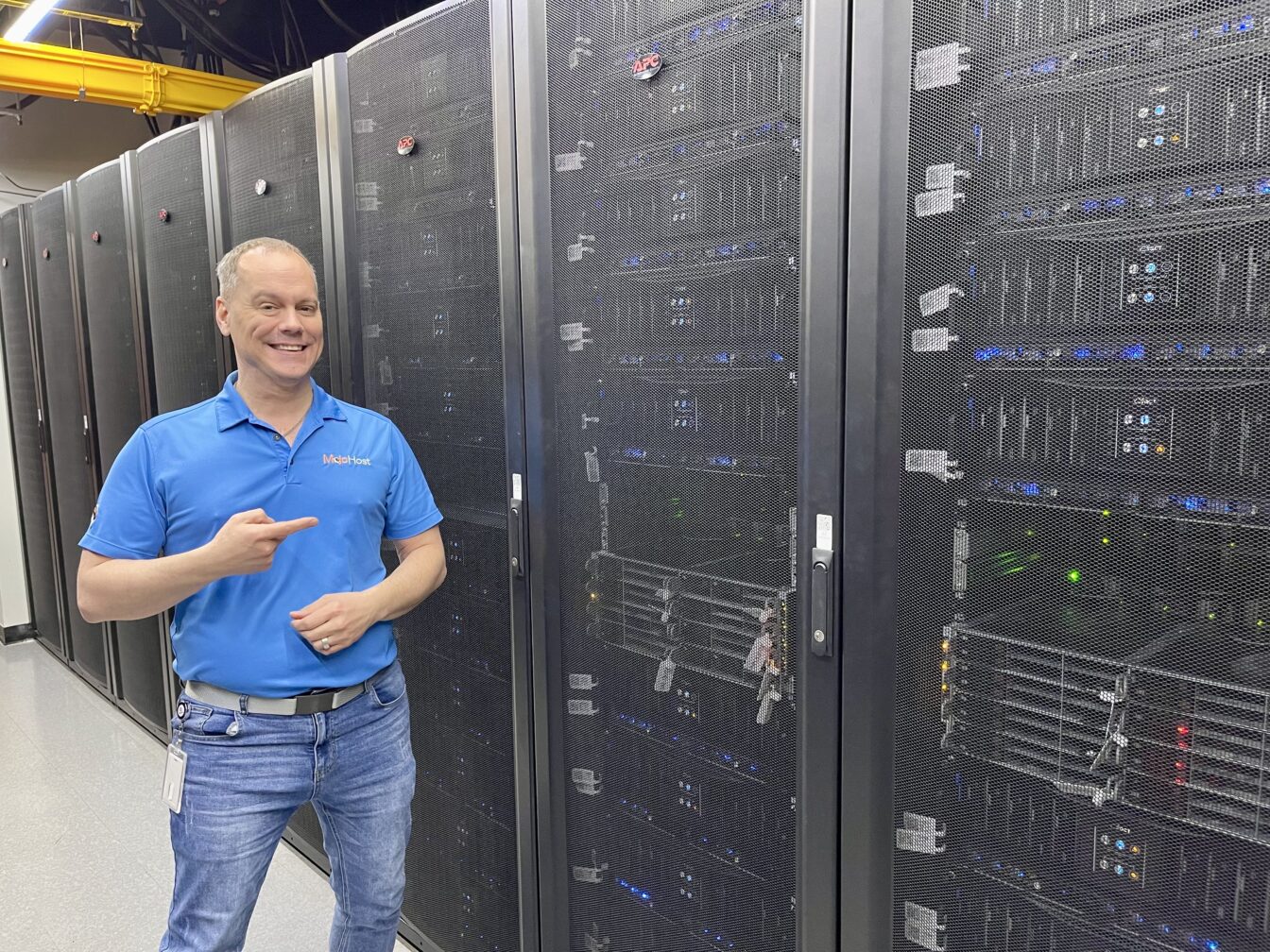
Guest Post By Brad Mitchell, President of MojoHost
I’m pleased to provide this guest post for the Adult Site Broker blog:
In the realm of web hosting, technological advancements are constantly reshaping the landscape. With the latest developments in Virtual Private Servers (VPS), we’re witnessing a significant shift in performance capabilities, largely due to advancements in hardware technologies like AMD Ryzen and EPYC processors, the advancement of PCI system buses, and NVMe storage.
While MojoHost is at the forefront of adopting these technologies, this article focuses on the technical aspects of these advancements and how they compare with legacy technologies.
Understanding PCI Bus 3.0 vs. 4.0
The Peripheral Component Interconnect (PCI) bus is a pathway that allows various components of a computer to communicate. This is the heart of every server, guiding how much data and how fast it travels from CPU, memory, storage, and out of your ethernet port to your surfers.
The evolution from PCI 3.0 to 4.0 doubles bandwidth. PCI 3.0 offers a data transfer rate of 8 GT/s (gigatransfers per second), which translates to approximately 1 GB/s (gigabytes per second) per lane.
In contrast, PCI 4.0 delivers 16 GT/s, or about 2 GB/s per lane. This increase in data transfer speed significantly enhances overall system performance, particularly for data-intensive tasks such as video processing and large-scale database operations.
Comparing HDDs, SSDs, and NVMe Storage
To understand the impact of storage technologies on server performance, we need to look at Hard Disk Drives (HDDs), Solid-State Drives (SSDs), and Non-Volatile Memory Express (NVMe) drives. Why does this matter to you? Each option represents approximately a 10x performance increase over its predecessor.
HDDs
Traditional HDDs use mechanical components to read/write data, resulting in slower data access and transfer rates. They typically offer IOPs (Input/Output Operations Per Second) in the range of 80-160 MB/s, making them suitable for basic storage needs but not for high-performance applications. Hard drives are mechanical with moving parts, and as a result, the number of operations per second they can manage is relatively low, from 75 to 150 IOPs.
SSDs
SSDs replaced moving parts with flash memory, substantially increasing speed. They offer IOPs of 200-550 MB/s, which is significantly higher than HDDs. SSDs are more reliable and efficient, making them popular for most modern computing needs. SSDs perform anywhere from 10,000 to 100,000 operations per second, making them a solid choice for everyday hosting requirements.
NVMe over PCIe SSDs
NVMe, a storage protocol designed for SSDs, further enhances performance. It operates over the PCIe bus (hence benefiting from PCIe 4.0’s increased speed) and provides a more direct path to the CPU. This results in IOPs in the range of 1-3 GB/s, which drastically improves HDDs and traditional SSDs.
The high throughput and low latency of NVMe drives make them ideal for applications requiring rapid data access and processing. NVMe is a giant leap in operations per second, sometimes achieving up to 1,000,000 operations per second.
The Impact on VPS Performance and Value
Integrating PCIe 4.0 and NVMe storage into VPS platforms marks a significant leap in server capabilities. VPS, which partitions a physical server into multiple virtual servers, has traditionally been limited by the underlying hardware’s capabilities.
With the new technology, each virtual server can handle more data faster, drastically improving the performance of hosted applications and services. This is particularly beneficial for data-heavy and real-time processing applications.
For hosting providers and users, this means access to higher-performing servers at potentially lower costs. The increase in efficiency can reduce the number of physical servers needed, leading to cost savings and a smaller environmental impact. Hosting providers who embrace these new technologies and invest in providing them to their customers deliver higher performance in this value-oriented product than ever before, even more than customers experienced with more expensive dedicated server solutions.
As we embrace these technological advancements, it’s clear that the future is not only bright but also available today. The shift from traditional HDDs to SSDs and now to NVMe storage, combined with the upgrade from PCI 3.0 to 4.0, represents a monumental improvement in server performance and efficiency.
Conclusion
At MojoHost, we’re excited to offer our clients these advanced VPS solutions, ensuring they have access to the latest and most efficient hosting technologies. In fact, our most robust offerings have transitioned to PCI 5.0, something not found at other web hosts, and represent yet another doubling of speed and performance across server components.
The evolution in VPS technology is not just a step forward; it’s a leap into a new era of hosting capabilities, promising unprecedented performance and value for users worldwide.
For those interested in upgrading their hosting solutions or learning more about these technologies, we encourage you to contact sales@mojohost.com for a detailed discussion on how these advancements can benefit your specific needs.
Here’s more from the Adult Site Broker blog: